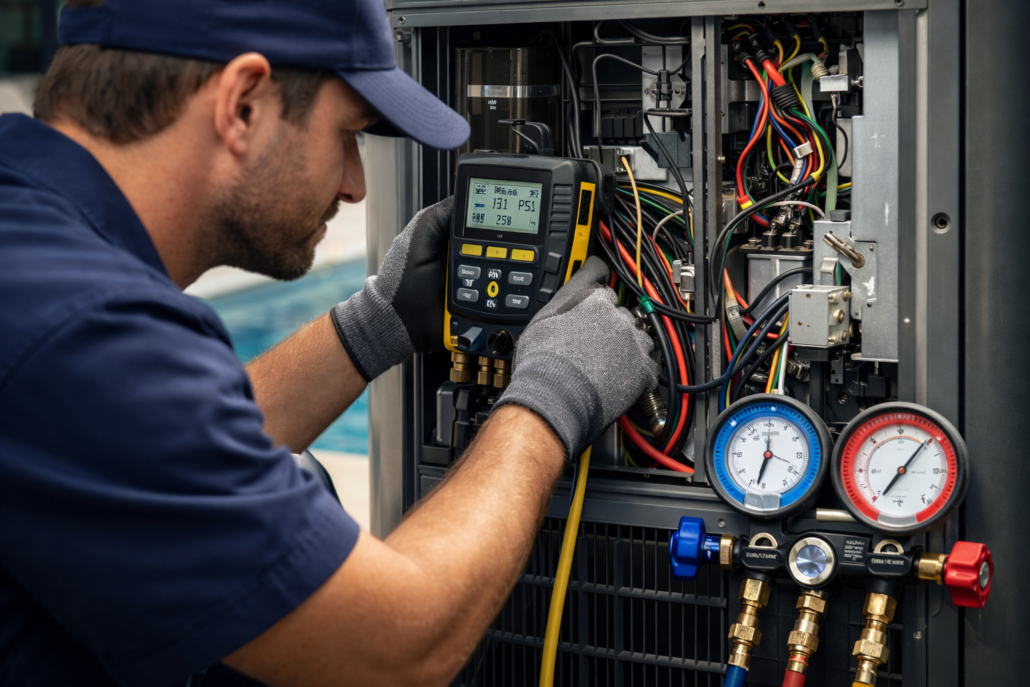

The hum of a perfectly functioning air conditioner is the sound of summer comfort. Yet, a silent saboteur, AC refrigerant overcharge, can turn that comfort into frustration, leading to inefficiency and costly damage. Many homeowners unknowingly fall prey to misconceptions about their AC system’s refrigerant, often believing that more is always better. This article aims to dispel those myths, offering clarity and empowering you to ensure your home remains a cool sanctuary.
We will delve into the critical role of refrigerant, expose the common myths surrounding overcharging, and provide authoritative insights into proper AC maintenance. Understanding the precise balance required for your system is key to preventing unnecessary repairs and maintaining optimal performance. Prepare to uncover the truths that will lead to a more efficient, long-lasting, and ultimately cooler home.
Key Takeaways
- Understand that an AC refrigerant overcharge significantly reduces efficiency and can cause severe damage, contrary to popular belief.
- Learn to identify the subtle yet critical symptoms of an overcharged AC system, from poor cooling to unusual noises.
- Discover why attempting DIY fixes for refrigerant issues is hazardous and often leads to more expensive professional repairs.
- Recognize the common causes of overcharge and the importance of certified HVAC professionals for accurate diagnosis and correction.
Understanding AC Refrigerant Overcharge: The Silent Saboteur
Your air conditioning system relies on a precise amount of refrigerant to effectively cool your home. This chemical compound absorbs heat from your indoor air and releases it outside, a continuous cycle that keeps your living space comfortable. When there’s an AC refrigerant overcharge, this delicate balance is disrupted, leading to a cascade of problems that can severely impact your system’s health and performance.
An overcharged system means there is too much refrigerant circulating within the sealed lines. This excess liquid can’t fully vaporize in the evaporator coil, causing high pressures and temperatures throughout the system. The consequences range from reduced cooling capacity to significant mechanical failures, making it a critical issue that demands attention.
Common Symptoms of AC Refrigerant Overcharge
Identifying an AC refrigerant overcharge early can save you from extensive repairs. Common symptoms include your AC running constantly without adequately cooling your home, leading to higher utility bills. You might also notice the outdoor unit freezing up or making unusual noises, which are clear indicators of a system under stress. Another tell-tale sign is liquid refrigerant returning to the compressor, a phenomenon known as slugging.
Why AC Refrigerant Overcharge Harms Efficiency
An overcharged AC system forces the compressor to work harder than intended. This increased workload elevates both the pressure and temperature within the system, reducing its ability to transfer heat effectively. The result is a significant drop in cooling capacity and a spike in energy consumption, meaning your AC struggles to cool your home, and your electricity bills climb unnecessarily. This inefficiency is a direct consequence of the imbalanced refrigerant level.
Compressor Damage from AC Refrigerant Overcharge
The compressor is the heart of your AC system, and an AC refrigerant overcharge poses a severe threat to its longevity. Excess liquid refrigerant can enter the compressor, a process called slugging, which is highly damaging. Compressors are designed to compress vapor, not liquid. Since liquids are incompressible, this can damage internal components like valves and pistons, leading to premature compressor failure and extremely expensive repairs. Continuing to run an overcharged unit is not safe and can lead to irreversible damage.
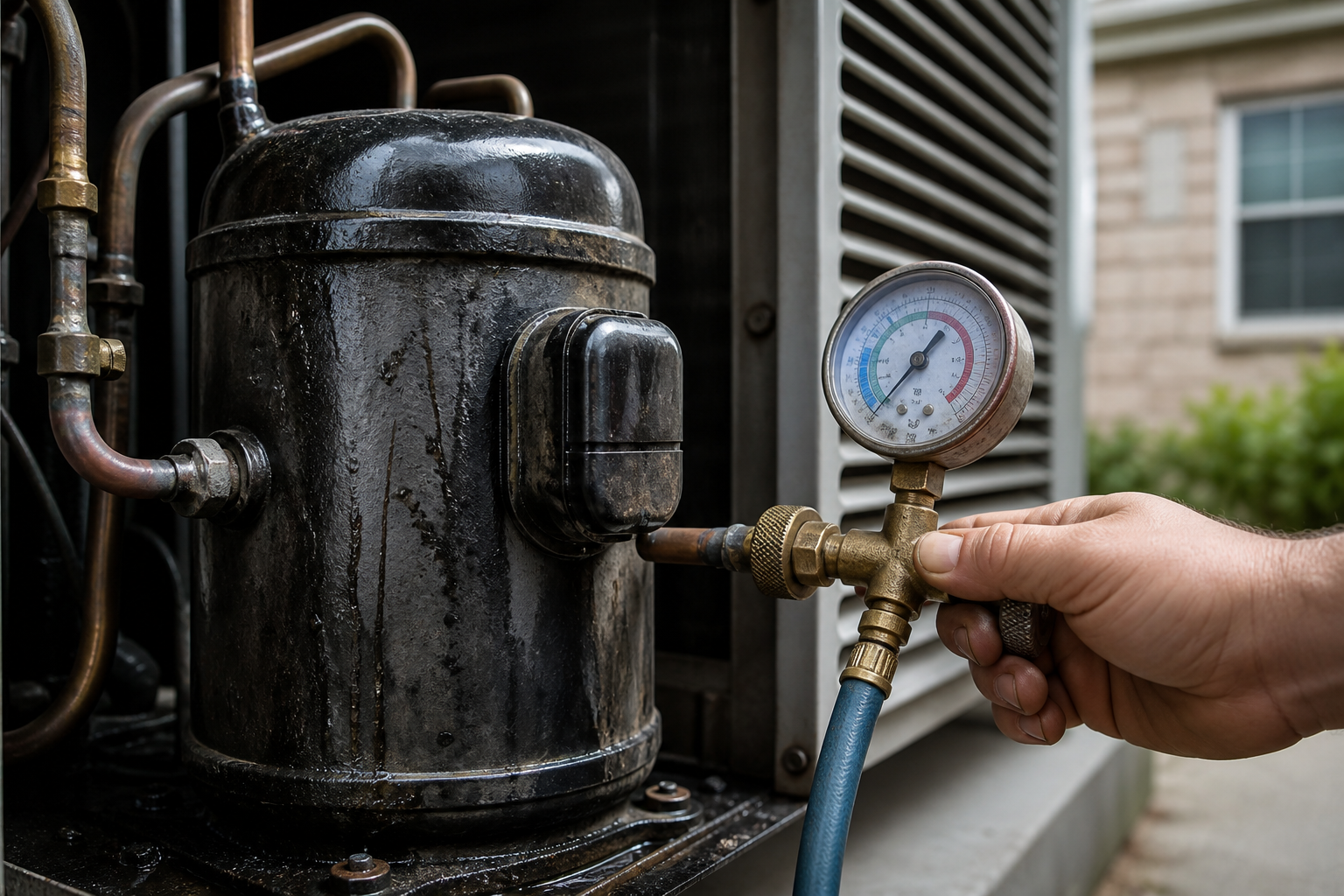
Myth #1: More Refrigerant Means More Cooling and AC Refrigerant Overcharge
One of the most persistent myths in HVAC is the idea that adding more refrigerant will make your AC unit cool better. This couldn’t be further from the truth, especially when it comes to AC refrigerant overcharge. Many homeowners, when faced with a struggling AC, assume it’s simply
Prevent Costly Damage from AC Refrigerant Overcharge with Stream Cold Air Corp
An overcharged AC system can lead to severe compressor damage and increased energy bills. Trust Stream Cold Air Corp for accurate diagnosis and expert correction of your AC refrigerant issues.
Frequently Asked Questions About AC Refrigerant Overcharge
What are the common symptoms of AC refrigerant overcharge?
Common signs include inadequate cooling, the AC running constantly, higher utility bills, liquid refrigerant returning to the compressor (slugging), and in some cases, the outdoor unit freezing up or making unusual noises.
How does an AC refrigerant overcharge affect system efficiency?
An overcharged AC system forces the compressor to work harder, increasing pressure and temperature. This leads to reduced cooling capacity, increased energy consumption, and overall decreased efficiency, meaning your home struggles to get cool.
Why is too much refrigerant bad for an AC compressor?
Excess refrigerant can cause “slugging” where liquid refrigerant enters the compressor instead of vapor. Liquids are incompressible, so this can damage internal components like valves and pistons, leading to premature compressor failure and expensive repairs.
What causes an air conditioner to become overcharged with refrigerant?
Overcharging most commonly occurs during system installation or service when a technician adds more refrigerant than the manufacturer’s specifications. It can also happen if a system that wasn’t actually low on refrigerant is “topped off” incorrectly.
How can you accurately diagnose an AC refrigerant overcharge?
Professional diagnosis involves using manifold gauges to read system pressures, checking superheat and subcooling measurements, and sometimes using specialized equipment to weigh the refrigerant charge. Visual inspection for symptoms is also crucial.
Can an overcharged AC system lead to higher utility bills?
Yes, absolutely. An AC refrigerant overcharge makes the system work harder and less efficiently to achieve the desired cooling. This increased workload directly translates to higher electricity consumption and consequently, higher utility bills.
What are the potential long-term damages of an AC refrigerant overcharge?
Long-term issues include premature compressor failure, accelerated wear on system components due to increased pressure, compromised cooling performance, and overall reduced lifespan of the entire HVAC unit.
How much does it cost to fix an AC system with refrigerant overcharge?
The cost varies based on location and the extent of the issue, but typically ranges from $150 to $500. This includes evacuating the excess refrigerant, potentially recharging to the correct level, and a system check.
Is it safe to continue running an AC unit that is overcharged?
No, it is not safe. Continuing to run an overcharged AC unit can cause severe and irreversible damage to the compressor and other vital components, leading to complete system breakdown and costly replacements.
Can I fix an AC refrigerant overcharge myself, or is professional help required?
Professional help is required. Handling refrigerants requires specialized tools, knowledge, and certifications due to environmental regulations and the complexity of HVAC systems. Attempting DIY can cause further damage and is hazardous.
Learn more from authoritative resources: Consumer Reports and HGTV.