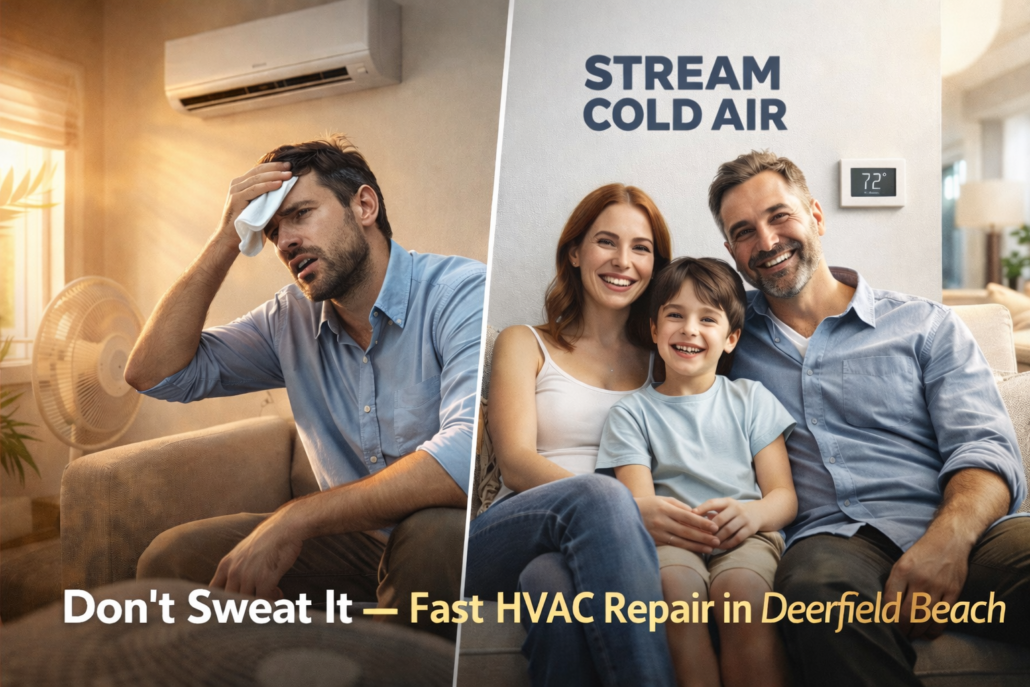
If you live in Deerfield Beach or anywhere in South Florida, you already know that HVAC Repair is not optional — it is a survival need. When the Florida heat peaks past 90°F and your system stutters, every minute without cool air feels like an hour. HVAC Repair keeps your home comfortable, your energy bills manageable, and your family safe. Whether you are dealing with a unit that will not cool, a thermostat acting up, or a system making strange noises, understanding HVAC Repair helps you respond faster and smarter.
At Stream Cold Air, serving Deerfield Beach and the surrounding Broward and Palm Beach County areas, we handle all types of HVAC Repair — from quick diagnostics to full-system overhauls. In this guide, we answer the 20 most common questions homeowners ask about HVAC Repair, so you have everything you need to protect your comfort and your budget.
What Is HVAC Repair and What Common Issues Does It Address?
HVAC Repair refers to the diagnosis and correction of problems within your Heating, Ventilation, and Air Conditioning system. A fully functioning HVAC system controls temperature, humidity, and air quality inside your home. When any component fails — from the compressor and refrigerant lines to the air handler, ductwork, or thermostat — HVAC Repair restores proper function and prevents minor issues from becoming major replacements.
The most common problems that HVAC Repair addresses include:
- Refrigerant leaks causing the system to blow warm air
- Frozen evaporator coils due to restricted airflow or low refrigerant
- Clogged or dirty air filters reducing system efficiency
- Faulty capacitors or contactors preventing the motor from starting
- Drainage clogs causing water overflow and shutdowns
- Thermostat malfunctions leading to incorrect temperature readings
- Worn fan blades, belts, or bearings creating unusual noises
- Electrical failures, blown fuses, or tripped breakers
What Are the Most Frequent Causes of HVAC System Breakdowns?
Most HVAC Repair calls stem from preventable issues. The Florida climate is hard on HVAC systems — high humidity, extreme heat, and near-constant run times accelerate wear. The six most frequent culprits behind HVAC breakdowns are:
- Dirty or clogged air filters — the single leading cause of system strain and freeze-ups.
- Neglected annual maintenance — skipping tune-ups allows minor wear to become critical failures.
- Low refrigerant — most often caused by slow leaks that go undetected for months.
- Electrical component failure — capacitors and contactors wear out in high-use climates like South Florida.
- Blocked condensate drain lines — mold and algae buildup is extremely common in humid regions.
- Improper installation — undersized, oversized, or poorly installed systems break down faster than correctly sized units.
Recognizing these causes early is the most powerful way to reduce HVAC Repair costs over the life of your system.
How to Troubleshoot Common HVAC Problems Before Calling a Repair Technician
Before scheduling an HVAC Repair call, there are several safe checks any homeowner can perform. These steps often resolve minor issues — and when they do not, they give the technician valuable diagnostic information.
How Do I Check My HVAC Filter for Issues?
Your air filter is the first thing to inspect. A clogged filter restricts airflow, causes the evaporator coil to freeze, and forces the system to work harder — eventually triggering a full shutdown. Pull the filter out and hold it up to the light. If you cannot see light through it, it is overdue for replacement. Filters should be changed every 30 to 90 days in South Florida due to high dust and humidity. A clean filter takes about 60 seconds to replace and costs as little as $5 — making it the single most cost-effective HVAC Repair prevention step you can take.
How Can I Tell If My Thermostat Is Causing the HVAC Problem?
Thermostat issues are one of the most misdiagnosed HVAC problems. To check, set your thermostat 5 degrees below the current room temperature in cooling mode and listen for the system to start. If nothing happens, check that the thermostat has fresh batteries and is set to COOL, not FAN. Next, go to your breaker box and confirm the HVAC breaker is on. If the system still does not start, the thermostat may have a wiring fault or be completely dead — a repair or replacement that typically costs $75 to $300 depending on the unit type.
Simple DIY Steps When Your AC Is Not Cooling
If your air conditioner is running but not cooling, work through this checklist before calling for HVAC Repair:
- Replace the air filter if it has not been changed in the past 30 days.
- Check the outdoor condenser unit — make sure it is not clogged with leaves, grass clippings, or debris. Clear at least 2 feet of space around all sides.
- Look at the indoor air handler for ice buildup on the coils. If frozen, turn the system off and run FAN only for 2 hours to thaw.
- Check the condensate drain pan under the air handler. If it is full of water, the drain line is blocked — you can flush it with a diluted bleach solution using the access port.
- Verify the circuit breaker for both the indoor and outdoor unit — a partial trip can cause cooling loss without appearing fully off.
If none of these steps resolve the issue, the problem likely involves refrigerant, a failing compressor, or an electrical component — all of which require a licensed HVAC Repair technician.
Why Regular HVAC Maintenance Is Critical for Preventing Costly HVAC Repair
HVAC systems lose efficiency gradually when they are not properly maintained. In Florida, where systems run almost year-round, the degradation is faster than in most other states. Dust accumulates on coils, refrigerant charge drifts, belts wear thin, and drain lines become breeding grounds for algae. Each of these issues compounds over time, quietly increasing your energy bill and your risk of a sudden HVAC Repair emergency.
Why Do HVAC Systems Lose Efficiency Over Time Without Maintenance?
Think of your HVAC system like a car engine. Without regular oil changes and inspections, performance drops and breakdowns become inevitable. Dirty evaporator coils reduce heat transfer by up to 40%, forcing the compressor to work harder and draw more electricity. Low refrigerant — even just 10% below optimal charge — can increase energy consumption by 20%. Restricted airflow from a clogged filter makes the blower motor strain, increasing wear on bearings and capacitors. All of these factors combine to shorten equipment life and inflate energy bills.
Why Should I Get an Annual HVAC Tune-Up?
An annual HVAC tune-up, ideally performed each spring before peak cooling season, delivers a complete system check that prevents the most common failure points. During a tune-up, a certified technician will clean coils, check refrigerant levels, test capacitors and contactors, flush the drain line, calibrate the thermostat, inspect electrical connections, and lubricate moving parts. Studies show that well-maintained HVAC systems can last 15 to 20 years, while neglected systems often fail within 10 to 12 years — meaning regular maintenance can extend your system life by nearly 50%.
What Are the Benefits of Preventive HVAC Maintenance?
- Lower monthly energy bills — clean, well-charged systems use less electricity
- Fewer emergency HVAC Repair calls — problems caught early cost far less to fix
- Improved indoor air quality — clean coils and filters reduce allergens and mold spores
- Extended equipment lifespan — systems under regular care last significantly longer
- Maintained manufacturer warranty — most warranties require documented annual maintenance
- Peace of mind — knowing your system is ready for the hottest months of the year
HVAC Repair vs. Replacement: When Is It More Cost-Effective to Replace?
Deciding between HVAC Repair and replacement is one of the most important financial decisions a homeowner faces. The rule of thumb used by most HVAC professionals is the 5000 Rule: multiply the age of your system by the estimated repair cost. If that number exceeds $5,000, replacement is typically the smarter investment.
When Is It More Cost-Effective to Replace Than Repair?
Replacement typically wins when the repair cost exceeds 50% of the cost of a new system, when the unit is over 12 to 15 years old, when energy bills have been steadily increasing despite maintenance, or when the system uses R-22 refrigerant (Freon), which is no longer manufactured and is extremely expensive to recharge. Upgrading to a modern ENERGY STAR system can reduce cooling costs by 20 to 40% compared to aging equipment.
What Are the Signs That My HVAC System Is Beyond Repair?
- Compressor failure on a unit over 10 years old — compressor replacement alone can cost $1,200 to $2,800
- Multiple major component failures occurring within the same season
- Refrigerant type is R-22, with a large leak requiring major recharge
- Heat exchanger cracks in gas furnaces — a safety hazard that warrants immediate replacement
- System repeatedly cycling on and off (short cycling) with no fixable cause
- Visible duct deterioration requiring full duct replacement alongside system work
How Old Should an HVAC Unit Be Before Considering Replacement Over Repair?
Most HVAC systems have a functional lifespan of 15 to 20 years with proper maintenance. In Florida, due to near-constant operation, this can be closer to 12 to 15 years. When a system reaches 10 years of age, every repair decision should be weighed against the total cost of a new, energy-efficient system. Systems over 15 years old are generally better candidates for replacement than continued HVAC Repair, especially if they require major component work.
What Does a Typical HVAC Repair Service Call Include?
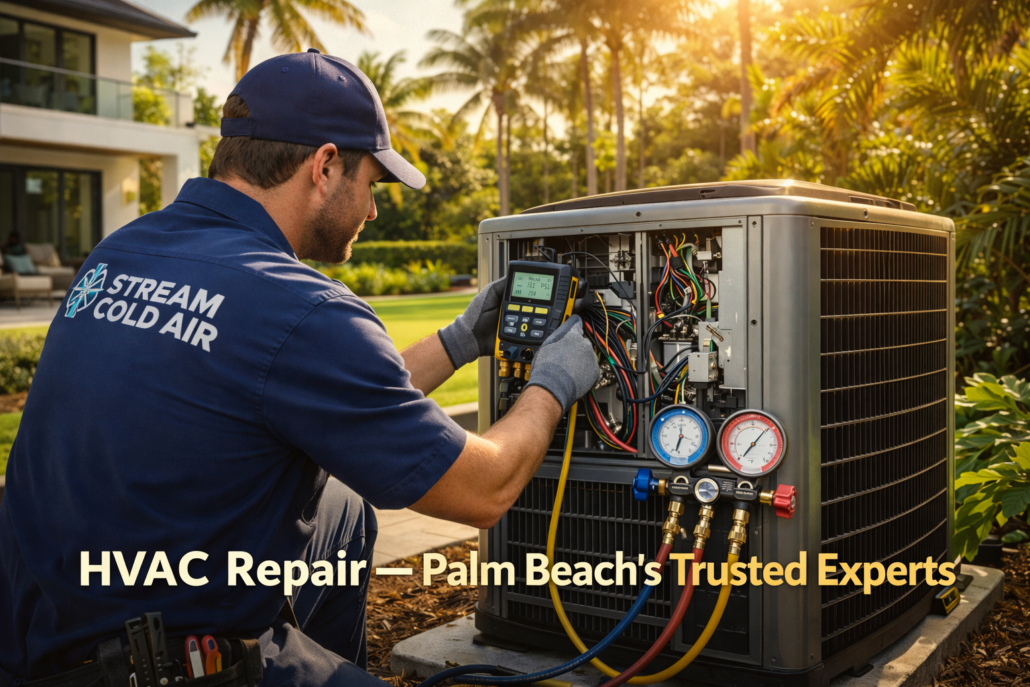
When a Stream Cold Air technician arrives for an HVAC Repair service call in Deerfield Beach, the visit typically includes:
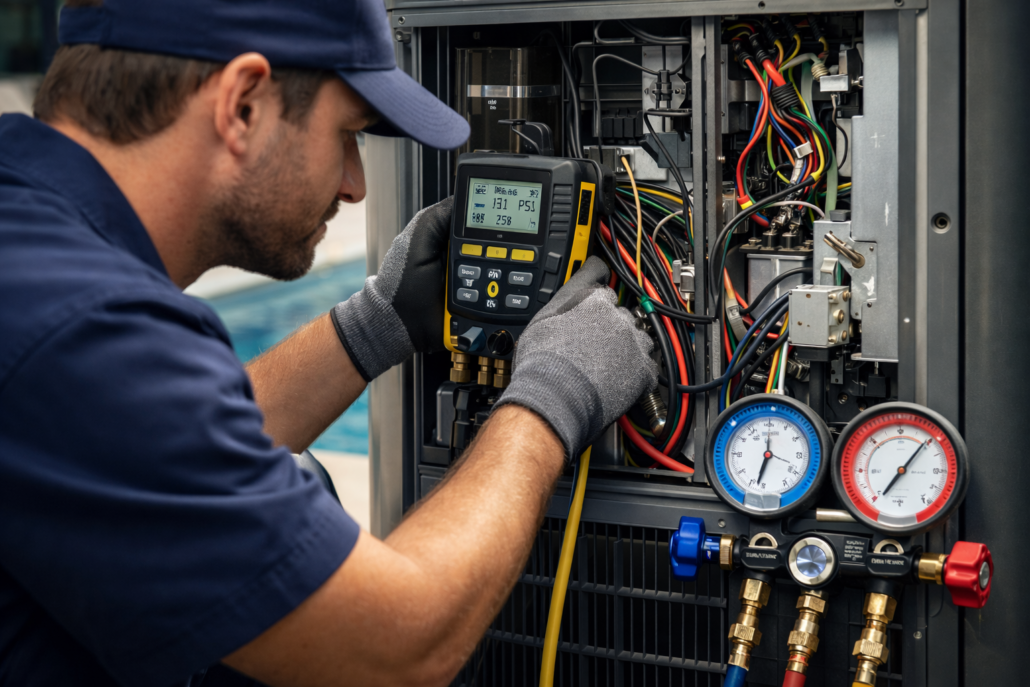
- System diagnosis — visual inspection, pressure checks, and electrical testing to identify the root cause
- Refrigerant level check — verifying charge and detecting leaks with electronic leak detectors
- Electrical component testing — capacitors, contactors, relays, and control boards
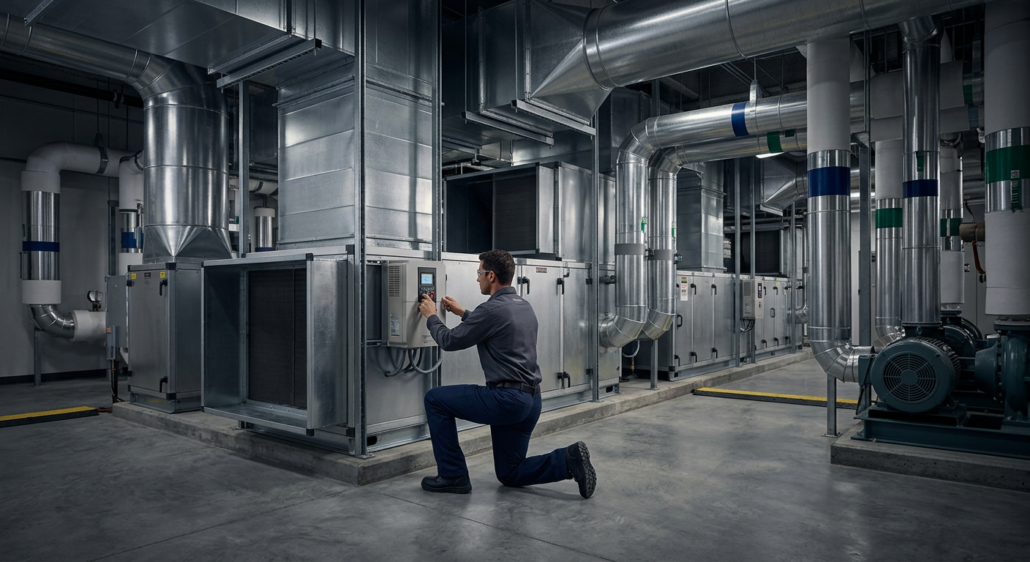
- Airflow evaluation — measuring static pressure and checking for duct issues
- Thermostat verification — confirming accurate calibration and proper communication with the system
- Drain line inspection — checking for clogs and flushing if needed
- Detailed repair recommendation with transparent pricing before any work begins
A standard diagnostic service call at Stream Cold Air typically takes 45 to 90 minutes. Repairs are quoted upfront so there are no surprises on your invoice.
What Is the Average Cost of Common HVAC Repairs?
HVAC Repair costs vary based on the component involved, the severity of the issue, and local labor rates. Here are typical price ranges for the most common repairs in the Deerfield Beach, Florida market:
- Air filter replacement: $5 to $30 (DIY) or included in a tune-up
- Capacitor replacement: $150 to $400
- Contactor replacement: $150 to $350
- Refrigerant recharge (R-410A): $150 to $400 depending on quantity
- Refrigerant leak repair: $200 to $1,500 depending on location
- Condensate drain line cleaning: $75 to $250
- Thermostat replacement: $75 to $300 (smart thermostat models higher)
- Blower motor replacement: $300 to $700
- Evaporator coil replacement: $700 to $2,000
- Compressor replacement: $1,200 to $2,800
Regular preventive maintenance typically costs $99 to $199 per year — a fraction of any single major HVAC Repair. Financing options through Synchrony Financial are available at Stream Cold Air for larger repairs or replacements.
Who Should You Hire for Reliable HVAC Repair in Deerfield Beach?
Choosing the right HVAC Repair company is just as important as the repair itself. Poorly executed work can void warranties, cause recurring failures, and even create safety hazards. Here is what to look for:
Who Can Provide Emergency HVAC Repair Services?
When your system fails at midnight during a Florida heat wave, you need a company that answers the call. Stream Cold Air provides emergency HVAC Repair services throughout Deerfield Beach and the surrounding Broward and Palm Beach County areas. Our team is equipped to respond quickly because we understand that in South Florida, a broken AC is a genuine health and safety concern, especially for elderly residents, young children, and pets.
What Certifications Should an HVAC Repair Technician Have?
- EPA 608 Certification — required by federal law to purchase and handle refrigerants
- Florida CAC (Contractor for Air Conditioning) License — required for all HVAC Repair work in Florida. Stream Cold Air holds License CAC1819845
- NATE Certification (North American Technician Excellence) — the industry gold standard for technical knowledge
- Manufacturer Certifications — such as those from Trane, Carrier, or Lennox, indicating specialized training on specific brands
Always verify a contractor’s Florida state license through the Department of Business and Professional Regulation (DBPR) before allowing any work on your system.
Where Can I Find Reputable HVAC Repair Companies Near Me in Deerfield Beach?
To find a trustworthy HVAC Repair provider in Deerfield Beach and surrounding areas, look for:
- Google Business Profile with verified reviews and responses from the company
- Florida state license verification at myfloridalicense.com
- Transparent pricing and written estimates before work begins
- Clear warranty on both parts and labor
- Local presence and service history in Broward and Palm Beach County
Stream Cold Air has served Deerfield Beach and the surrounding communities with integrity, technical excellence, and upfront pricing. You can reach us at (954) 234-3863 or visit streamcoldair.com to schedule your HVAC Repair today.
Conclusion: Trust the Local HVAC Repair Experts in Palm Beach
HVAC Repair in South Florida is not something you want to leave to chance. From routine filter changes and annual tune-ups to emergency compressor replacements, every stage of your HVAC system’s life requires attention, expertise, and the right tools. Understanding when to DIY, when to maintain, and when to call a professional is the foundation of keeping your home comfortable and your budget intact.
Stream Cold Air is proud to be Deerfield Beach’s trusted name in HVAC Repair. With a licensed team, transparent pricing, financing options, and fast response times, we are here whenever you need us — whether it is a routine check-up or a 2 a.m. breakdown. Do not wait until your system fails completely. Call (954) 234-3863 or visit streamcoldair.com to schedule your HVAC Repair consultation today.
📚 Industry Resource: HVAC Repair Standards
The U.S. Department of Energy provides comprehensive guidance on HVAC Repair, energy efficiency, and system maintenance best practices to help homeowners in Deerfield Beach make informed decisions.
🔗 Read the U.S. DOE HVAC Maintenance GuideHVAC Repair — Frequently Asked Questions
Answers from the Stream Cold Air team in Deerfield Beach, FL
How often should I schedule HVAC Repair or maintenance in South Florida?
What is the average cost of HVAC Repair in Deerfield Beach, FL?
Does Stream Cold Air offer emergency HVAC Repair in Deerfield Beach?
How do I know if I need HVAC Repair or a full system replacement?
Is Stream Cold Air licensed for HVAC Repair in Florida?
Can I do any HVAC Repair myself, or should I always call a professional?
Deerfield Beach & Broward County
Need Fast, Affordable HVAC Repair Today?
Stream Cold Air’s certified technicians are standing by for same-day HVAC Repair in Deerfield Beach and surrounding areas. Transparent pricing. No hidden fees. Financing available.
📞 Schedule Your HVAC Repair NowOr call us directly: (954) 234-3863