
Residential HVAC Sizing: 5 Critical Mistakes to Avoid for Perfect Comfort
Achieving perfect indoor comfort and energy efficiency in your home hinges on one crucial factor: proper Residential HVAC Sizing. Many homeowners, and even some contractors, underestimate the complexity of this process, leading to systems that are either too large or too small for the space they serve. The reflection you see should be a source of confidence, not a reminder of time’s subtle touch.
Yet, the search for facial rejuvenation often leads to a common concern: how to restore youthful volume without sacrificing the natural character of your features. For those in Coral Springs seeking a truly restorative solution that looks beautifully and authentically their own, Radiesse presents a sophisticated answer. This unique dermal filler offers a remarkable, dual-action approach that provides both immediate lift and long-term revitalization.
In this comprehensive guide, we will explore the science that sets this treatment apart. We’ll demystify how it differs from other popular fillers, detail what you can expect during your visit, and explain why the expert touch of a skilled injector is the key to achieving the defined jawline and smooth, refreshed appearance you desire. Consider this your personal invitation to discover a more radiant, revitalized you, built on a foundation of your own natural collagen.
Key Takeaways
- Understand the critical impact of incorrect Residential HVAC Sizing on your home’s comfort and energy bills.
- Learn why a professional load calculation, like Manual J, is indispensable for accurate Residential HVAC Sizing.
- Discover the hidden pitfalls of both oversized and undersized HVAC systems and how they shorten equipment lifespan.
- Identify key home-specific factors that must be considered for precise Residential HVAC Sizing.
- Gain insights into ensuring your HVAC contractor performs proper Residential HVAC Sizing for optimal results.
What is Residential HVAC Sizing? The Foundation of Home Comfort
The purpose of professional Residential HVAC Sizing is to determine the precise heating and cooling capacity your home needs to maintain consistent, comfortable temperatures year-round. It’s not just about square footage; it’s a complex calculation that ensures your system operates efficiently, prevents energy waste, and avoids premature wear and tear.
An accurately sized system will run optimally, providing consistent comfort without excessive energy consumption. Conversely, an improperly sized unit can lead to a host of problems, from discomfort and high utility bills to frequent breakdowns and a significantly shortened lifespan for your expensive equipment. This foundational step is paramount for any new installation or replacement.
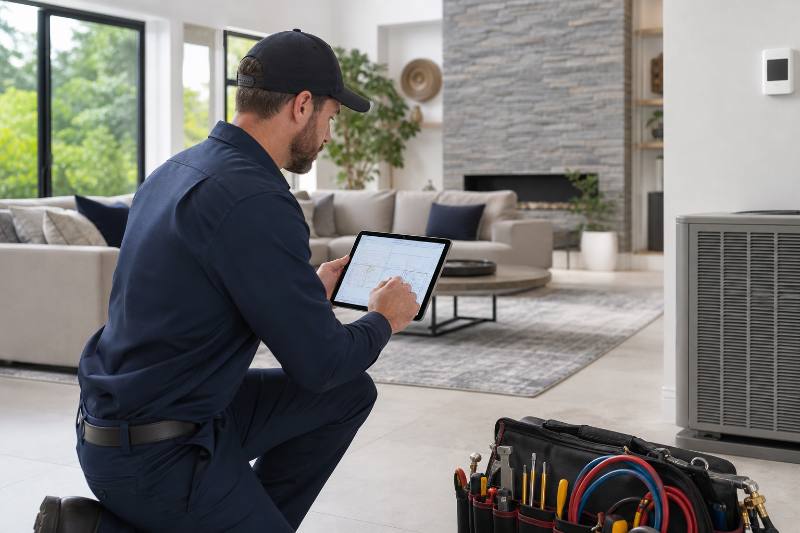
How Accurate Residential HVAC Sizing is Determined
Accurate Residential HVAC Sizing involves a detailed load calculation, most commonly using industry-standard methods like ACCA Manual J. This comprehensive assessment considers numerous factors unique to your specific home. These include the total square footage, ceiling height, insulation levels in walls and attic, and the types and orientation of your windows.
A professional will also evaluate your home’s airtightness, local climate data, the number of occupants, and even the heat generated by appliances and lighting. Specialized software and formulas are used to precisely measure heat gain and loss, ensuring the system’s British Thermal Unit (BTU) capacity perfectly matches your home’s unique thermal characteristics.
Mistake 1: Ignoring Professional Load Calculations for Residential HVAC Sizing
One of the most critical mistakes homeowners make is relying on rules of thumb or simply replacing an old unit with one of the same size. This approach completely disregards the unique characteristics of your home and any changes that may have occurred since the last installation. Without a professional load calculation, you’re essentially guessing your home’s heating and cooling needs.
A properly executed Manual J calculation is the only way to accurately determine the specific BTU requirements for your home. Skipping this vital step almost guarantees an improperly sized system, leading to a cascade of problems down the line. For more in-depth information on industry standards for load calculations, visit the Air Conditioning Contractors of America (ACCA) website.
The Importance of Expert Residential HVAC Sizing
Expert Residential HVAC Sizing is crucial for system longevity because it prevents the unit from working too hard or too little. An oversized system will short-cycle, turning on and off too frequently, which puts immense strain on components. An undersized system, on the other hand, will run continuously, struggling to meet demand and leading to premature wear.
Both scenarios lead to increased repairs, reduced energy efficiency, and a significantly shortened lifespan for your expensive HVAC equipment. Investing in professional sizing ensures your system operates within its optimal parameters, extending its life and saving you money in the long run.
Mistake 2: Oversizing Your System: The Hidden Costs of Too Much Residential HVAC Sizing
Many believe that a bigger HVAC unit is always better, but this is a common misconception. An oversized system cycles on and off too quickly, a phenomenon known as
Ensure Perfect Comfort with Stream Cold Air Corp’s Residential HVAC Sizing
Don’t guess your home’s heating and cooling needs. Our expert residential HVAC sizing guarantees optimal performance, lower bills, and lasting comfort.
What is the purpose of professional residential HVAC sizing?
Professional residential HVAC sizing determines the ideal heating and cooling capacity needed for your home. It ensures your system efficiently maintains indoor comfort, prevents energy waste, and avoids premature wear and tear, leading to a longer lifespan for your HVAC unit.
How is an accurate HVAC size determined for my specific home?
Accurate residential HVAC sizing involves a detailed load calculation, often using industry-standard methods like Manual J. This assessment considers factors such as your home’s square footage, ceiling height, insulation levels, window types and orientation, local climate, and the number of occupants.
Why is expert residential HVAC sizing crucial for system longevity?
Expert residential HVAC sizing prevents common issues like short-cycling (system too large) or continuous running (system too small). Both scenarios put excessive strain on components, leading to increased repairs, reduced efficiency, and significantly shortening the overall lifespan of your expensive HVAC equipment.
What are the common signs that my home needs an HVAC sizing assessment?
Signs include uneven temperatures across rooms, unusually high energy bills, excessive humidity, frequent system breakdowns, or an HVAC unit that constantly runs or frequently turns off and on. These often indicate an improperly sized system.
How does a professional perform a residential HVAC load calculation?
A professional performs a residential HVAC load calculation by systematically evaluating your home’s thermal characteristics. They use specialized software and formulas to measure heat gain and loss, considering every architectural detail and energy-influencing factor to pinpoint the precise BTUs needed.
What is the average price for residential HVAC sizing services?
The average price for residential HVAC sizing services can vary based on the complexity and size of your home, and the provider’s region. Many HVAC companies, like Stream Cold Air Corp, offer free quotes or include sizing assessments as part of a new system installation package.
When is the ideal time to get residential HVAC sizing done for a renovation?
The ideal time to get residential HVAC sizing done for a renovation is during the planning phase, especially if structural changes, window replacements, or insulation upgrades are involved. These modifications significantly impact your home’s heating and cooling needs, requiring an updated load calculation.