The HVAC Quote Process can often feel overwhelming, a maze of technical terms, varying prices, and contractor promises. Yet, navigating this crucial step effectively is paramount to ensuring your home’s comfort system is both efficient and cost-effective. It’s not just about getting a price; it’s about understanding the value, the scope of work, and the long-term benefits of your investment. For homeowners, a well-executed HVAC Quote Process means peace of mind and optimal indoor climate control.
In this comprehensive guide, we will demystify the entire journey, from initial contact to final decision. We’ll equip you with the knowledge to ask the right questions, compare bids intelligently, and ultimately secure an unbeatable value for your heating, ventilation, and air conditioning needs. Consider this your essential blueprint for a successful HVAC Quote Process.
Key Takeaways
- Master the typical steps of the HVAC Quote Process to ensure you are always prepared.
- Understand the key factors that cause price variations between different HVAC quotes.
- Learn 5 essential questions to ask every contractor to uncover true value and expertise.
- Discover how to effectively compare multiple quotes, looking beyond just the bottom-line cost.
- Gain confidence in making an informed decision for your home’s long-term comfort and efficiency.
Understanding the Typical HVAC Quote Process
Embarking on a new HVAC installation or a major replacement can seem daunting, but understanding the typical HVAC Quote Process can simplify everything. This structured approach ensures that both you and the contractor are aligned on expectations and requirements. Knowing what to anticipate at each stage empowers you to ask informed questions and make confident decisions about your home’s comfort system.
Initial Consultation and Assessment
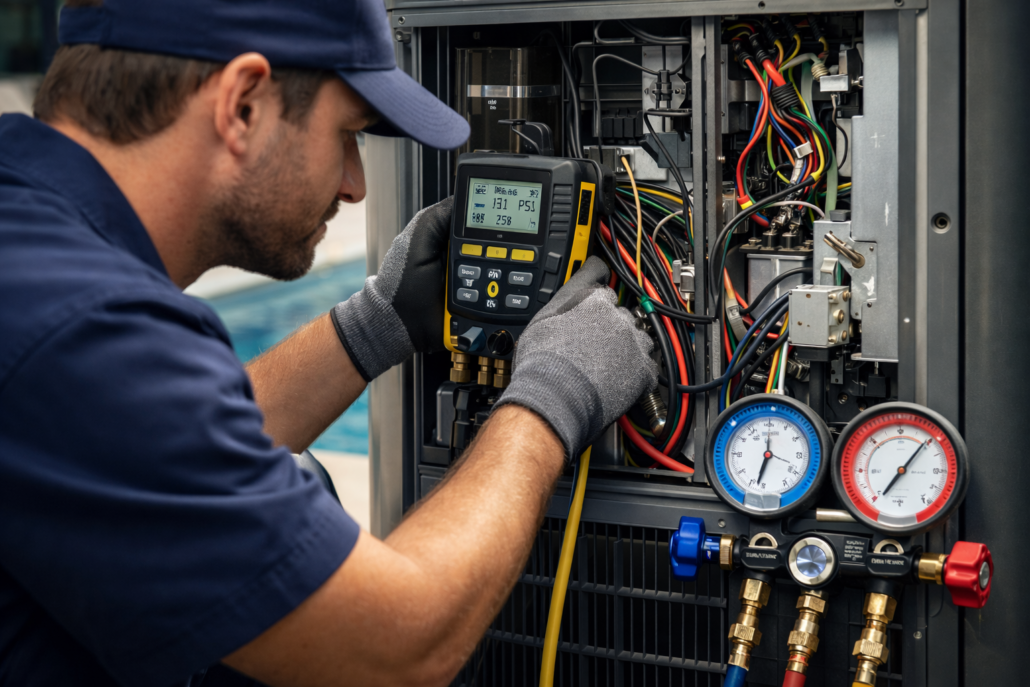
The journey usually begins with an initial consultation, often an in-home visit by a qualified HVAC technician. During this visit, they will assess your current system, inspect your home’s layout, insulation, and ductwork, and discuss your specific heating and cooling needs. This comprehensive evaluation is critical for accurate system sizing and identifying any unique challenges or opportunities for improvement.
This assessment phase typically takes 1-2 hours, depending on the complexity of your home and existing system. The technician will gather all necessary information to formulate a precise recommendation tailored to your property. This personalized approach helps avoid oversized or undersized systems, which can lead to inefficiency and discomfort.
The Proposal and What to Expect
Following the assessment, the contractor will present a detailed written proposal. This document should clearly outline the recommended equipment, including make, model, and efficiency ratings (like SEER for AC units). It will also itemize labor costs, materials, and any additional services such as old unit removal, ductwork modifications, or thermostat upgrades.
A comprehensive proposal during the HVAC Quote Process should also include warranty information for both parts and labor, financing options, and a clear timeline for installation. While some contractors might provide a preliminary quote on the spot, a detailed, written estimate often follows within 24-48 hours. This allows for thorough review and comparison.
Why HVAC Quotes Have Different Prices: Factors Influencing Your HVAC Quote Process
It’s common to receive varying prices during the HVAC Quote Process, and understanding why these differences occur is crucial for making an informed decision. Price discrepancies are rarely arbitrary; they reflect a multitude of factors that contribute to the overall value and quality of the service. Focusing solely on the lowest bid can sometimes lead to long-term issues.
Equipment Quality and Efficiency
One of the primary drivers of cost variation is the brand, model, and energy efficiency rating of the HVAC equipment itself. Higher SEER (Seasonal Energy Efficiency Ratio) or HSPF (Heating Seasonal Performance Factor) rated units, while more expensive upfront, offer significant long-term savings on utility bills. Premium brands may also come with advanced features, better warranties, and superior build quality, influencing the overall HVAC Quote Process.
Installation Complexity and Labor
The complexity of the installation plays a major role in pricing. Factors such as the need for ductwork repair or replacement, electrical upgrades, structural modifications, or difficult access to installation areas can increase labor hours and material costs. Contractors with highly skilled, certified technicians may also charge more for their expertise, which often translates to a more reliable and efficient installation.
Contractor Reputation and Services
Reputable contractors often have higher overheads due to investments in training, insurance, and customer service infrastructure. They might include value-added services like post-installation follow-ups, comprehensive warranties, or even a satisfaction guarantee. While their initial quote might be higher, the peace of mind and quality of service they provide can offer superior value in the long run during your HVAC Quote Process.
Essential Information for an Accurate HVAC Quote Process
To ensure you receive the most accurate and beneficial proposals, being prepared with key information is vital for a smooth HVAC Quote Process. Providing comprehensive details upfront allows contractors to tailor their recommendations precisely to your home’s unique requirements, preventing costly surprises later on.
Your Home’s Specific Needs
Be ready to discuss your home’s square footage, the age and condition of your current HVAC system, and any specific comfort issues you’re experiencing (e.g., uneven heating/cooling, high energy bills). Your preferences regarding energy efficiency, specific brands, or indoor air quality solutions are also important. Having recent utility bills can help contractors analyze your current energy consumption and project potential savings.
The Importance of an In-Home Inspection
An in-home inspection is almost always required for an accurate HVAC Quote Process, especially for new installations or full system replacements. This allows the contractor to properly size the system, identify any unique installation challenges, and inspect existing ductwork. Without this, any quote would be based on assumptions, potentially leading to an improperly sized or inefficient system.
Limitations of Phone or Online Quotes
While preliminary estimates can sometimes be obtained over the phone or online, these are rarely precise enough for a major HVAC project. Such quotes cannot account for the specific nuances of your home’s structure, existing ductwork, or electrical system. For a truly accurate and reliable HVAC Quote Process, an in-person assessment is indispensable to avoid unforeseen costs or performance issues.
Five Essential Questions to Ask During Your HVAC Quote Process
Engaging with contractors during the HVAC Quote Process is your opportunity to gather critical information and assess their expertise. Asking the right questions can reveal a contractor’s professionalism, the quality of their recommendations, and the overall value they offer. These five questions are designed to empower you.
Question 1: What System Size and SEER Rating Do You Recommend?
An appropriately sized system is crucial for efficiency and comfort. Ask the contractor to explain their load calculation process (e.g., Manual J) and justify the recommended tonnage and SEER/HSPF rating. A higher SEER rating indicates greater energy efficiency, which can lead to significant long-term savings on your utility bills. Understanding this ensures you’re not paying for an oversized unit or getting an undersized one.
Question 2: Can You Provide a Detailed Cost Breakdown?
A transparent cost breakdown is vital. Inquire about the individual costs for equipment, labor, permits, materials, and any additional services like ductwork modifications or old unit removal. This level of detail helps you understand where your money is going and allows for a more accurate comparison between different quotes. Hidden fees should never be part of a professional HVAC Quote Process.
Question 3: What Warranties and Guarantees Are Included?
Clarify the warranty terms for both the equipment and the installation labor. Equipment warranties typically come from the manufacturer, while labor warranties are provided by the contractor. A strong warranty package demonstrates a contractor’s confidence in their work and provides you with protection against future issues. Ask about any satisfaction guarantees as well.
Question 4: What Are Your Installation Procedures and Timeline?
Understanding the installation process helps you prepare your home and manage expectations. Ask about the estimated start and completion dates, how long the actual installation will take, and what steps will be involved (e.g., protecting your home, cleanup). A clear timeline and procedure indicate a well-organized and professional approach to the HVAC Quote Process.
Question 5: Are You Licensed, Insured, and Do You Have References?
This is a non-negotiable question. Verify that the contractor is properly licensed and insured to operate in your area. Requesting references from previous clients can provide valuable insights into their reliability, quality of work, and customer service. A reputable contractor will be transparent about their credentials and happy to provide testimonials. For more on contractor vetting, consider resources like the ENERGY STAR guide to finding a qualified contractor.
Comparing Multiple HVAC Quotes Effectively for the Best Value
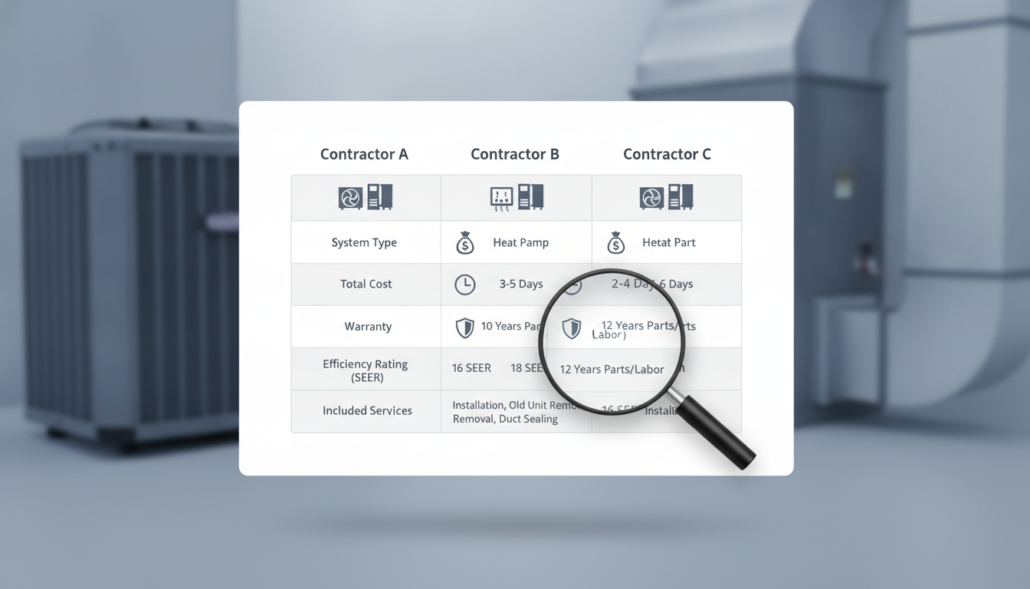
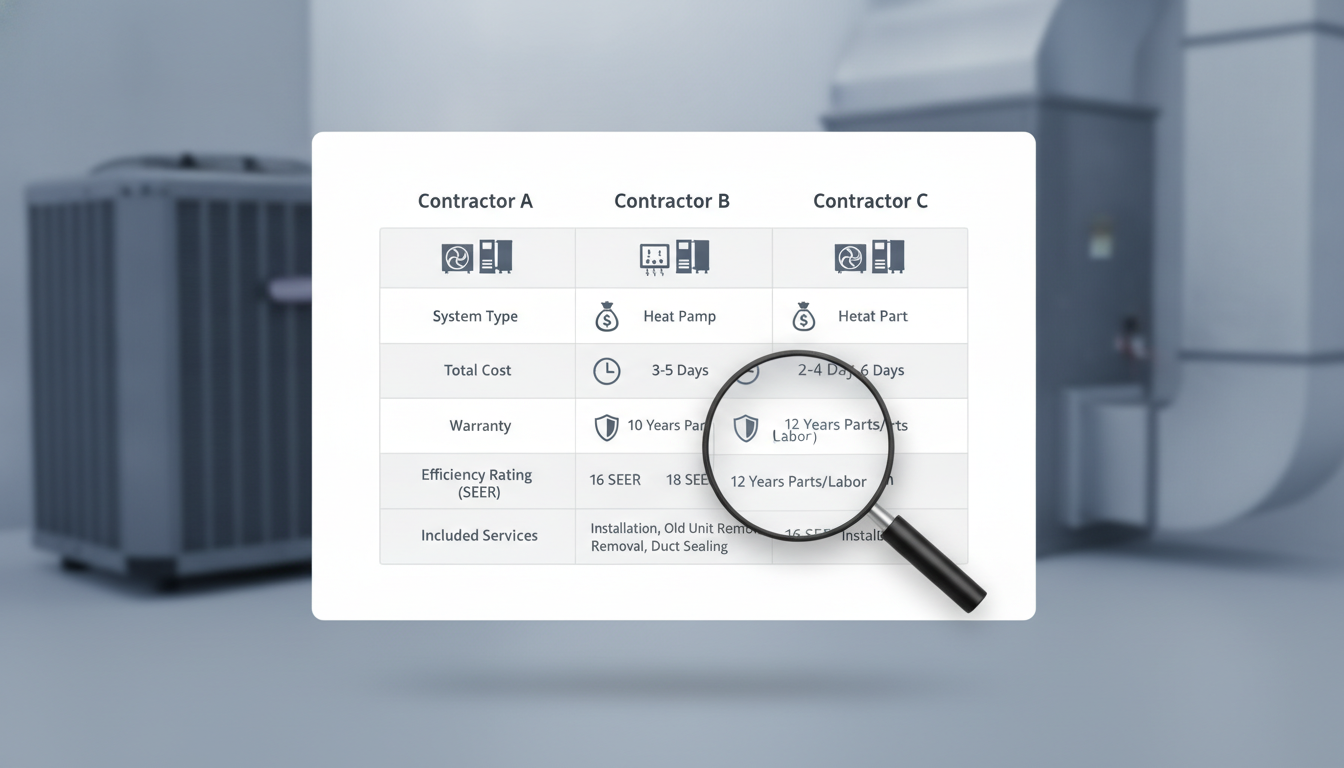
Once you’ve gathered several proposals, the next critical step in the HVAC Quote Process is to compare them effectively. This goes beyond simply looking at the total price. A thorough comparison ensures you’re getting the best value, not just the cheapest option, for your long-term comfort and investment.
Beyond the Bottom Line: Comprehensive Comparison
Create a checklist to compare each quote’s scope of work, equipment models, energy efficiency ratings (SEER/HSPF), warranty terms (parts and labor), and included services (e.g., permits, old unit removal, thermostat upgrades). Also, consider the contractor’s reputation, responsiveness, and professionalism throughout the HVAC Quote Process. A slightly higher price might be justified by superior equipment, a better warranty, or a more experienced installer.
What to Do with High or Low Quotes
If an HVAC quote seems unexpectedly high, ask the contractor to justify the costs, perhaps by highlighting premium equipment or complex installation requirements. For an unusually low quote, exercise caution. It might indicate hidden costs, subpar equipment, or a lack of proper licensing and insurance. Always seek clarification and ensure all aspects of the job are explicitly covered in writing during the HVAC Quote Process.
Are HVAC Quotes Binding, or Can the Price Change Later?
Generally, a written HVAC quote should be binding for a specified period, usually 30-90 days. However, it’s crucial to confirm this with the contractor. Reputable companies will honor their written quotes unless unforeseen circumstances (like discovering asbestos during demolition) necessitate a change, which should always be communicated and agreed upon in writing before proceeding. Always ensure the terms are clear before you commit.
Optimizing Your HVAC Quote Process: Timing and Reliability
Strategic timing and careful selection of contractors can significantly enhance your HVAC Quote Process. By planning ahead and choosing reliable professionals, you can secure better pricing, faster service, and greater peace of mind.
Best Time to Get an HVAC Quote
The best time to get an HVAC quote for installation or replacement is typically during the off-peak seasons, such as spring (before the summer heatwave) or fall (before the winter chill). During these periods, contractors often have more availability, are less rushed, and may offer more competitive pricing or promotions. Avoiding peak demand seasons can lead to a more relaxed and thorough HVAC Quote Process.
Finding Reliable Contractors for Your HVAC Quote Process
To find reliable contractors, start by asking for recommendations from friends, family, or neighbors. Check online reviews on platforms like Google, Yelp, or the Better Business Bureau. Verify their licensing and insurance. A good contractor will be transparent, communicative, and willing to answer all your questions, making your HVAC Quote Process much smoother. Consider reaching out to local experts like Stream Cold Air Corp for a trustworthy estimate.
Get an Expert HVAC Quote Process for Your Home
Stream Cold Air Corp provides transparent and detailed HVAC quotes, ensuring you understand every aspect of your heating and cooling investment. Our certified technicians offer honest advice and reliable solutions.
Navigating the HVAC Quote Process doesn’t have to be a source of stress. By understanding the typical steps, recognizing factors that influence pricing, and asking the right questions, you empower yourself to make an informed decision. Remember to compare quotes thoroughly, looking beyond just the price tag to evaluate the overall value, equipment quality, and contractor reliability. A well-chosen HVAC system is a long-term investment in your home’s comfort and energy efficiency, and a diligent HVAC Quote Process is your first step towards securing that unbeatable value.
What is the typical HVAC quote process?
The typical HVAC quote process involves an initial consultation, usually an in-home inspection by a technician to assess your current system and home’s needs, discussion of available options and recommendations, and then the presentation of a detailed written estimate. This estimate should outline equipment, labor, warranty, and payment terms.
How long does it take to get an HVAC quote?
The time to get an HVAC quote can vary. The in-home consultation typically lasts 1-2 hours. The contractor might provide a preliminary quote on the spot or email a detailed proposal within 24-48 hours. Expedited services might offer quicker turnaround times.
Why do HVAC quotes have different prices?
HVAC quotes have different prices due to various factors including the brand and model of equipment, system size, SEER rating (energy efficiency), complexity of installation, required ductwork modifications, contractor overhead, warranty offers, and the specific services included like old unit removal or thermostat upgrades.
What information do I need to provide for an HVAC quote?
For an accurate HVAC quote, you typically need to provide details about your home’s square footage, current HVAC system’s age and condition, any specific comfort issues you’re experiencing, your budget, and preferences regarding energy efficiency or specific brands. Having your utility bills can also help assess current operating costs.
Is an in-home inspection required for an accurate HVAC quote?
Yes, an in-home inspection is generally required for an accurate HVAC quote, especially for new installations or full system replacements. This allows the contractor to correctly size the system, identify any unique installation challenges, inspect existing ductwork, and ensure the proposed solution meets your home’s specific requirements.
How do I compare multiple HVAC quotes effectively?
To compare multiple HVAC quotes effectively, look beyond just the bottom-line price. Compare the scope of work, equipment models, energy efficiency ratings (SEER/HSPF), warranty terms (parts and labor), included services (e.g., permits, old unit removal), financing options, and the contractor’s reputation and licensure.
What questions should I ask an HVAC contractor during a quote?
During an HVAC quote process, ask about the recommended system’s sizing, energy efficiency, warranty details, maintenance requirements, and the total cost breakdown including labor and materials. Inquire about the contractor’s licensing, insurance, and references, and confirm the timeline for installation and payment terms.
What factors influence the cost breakdown in an HVAC quote?
Key factors influencing the cost breakdown in an HVAC quote include the cost of the unit itself (compressor, coil, furnace), labor for installation, refrigerant, new electrical wiring or gas lines, ductwork modifications, permits, thermostat upgrades, and any additional services like zoning or indoor air quality enhancements.
What should a comprehensive HVAC quote include?
A comprehensive HVAC quote should include a detailed breakdown of equipment (make, model, SEER), labor costs, permits, materials, removal of old equipment, warranty information (parts and labor), financing options, a clear scope of work, and estimated completion time. It should leave no room for hidden fees.
When is the best time of year to get an HVAC quote for installation?
The best time to get an HVAC quote for installation is typically during the off-peak seasons, such as spring (before summer rush) or fall (before winter rush). Contractors often have more availability, offer better pricing, and can complete installations without the urgency of extreme weather, potentially leading to more competitive offers.