Duct Leak Detection: 3 Essential Signs Your Home Needs It Now
Duct Leak Detection is a critical service for any homeowner looking to maintain an efficient and comfortable living environment. Hidden leaks in your HVAC ductwork can silently drain your energy budget, compromise indoor air quality, and lead to inconsistent temperatures throughout your home. Understanding the signs of these elusive problems is the first step toward a more efficient and comfortable home.
This comprehensive guide will illuminate the crucial indicators that suggest your home is suffering from duct leaks. We will explore why professional detection is paramount, detail the advanced methods and specialized tools HVAC technicians use, and outline the significant benefits of addressing these issues promptly. Discover how identifying and sealing these leaks can transform your home’s comfort and energy efficiency.
Key Takeaways
- Recognize the three critical signs—high energy bills, inconsistent temperatures, and excessive dust—that signal the urgent need for Duct Leak Detection in your home.
- Understand why professional expertise and specialized tools are indispensable for accurately locating and sealing hidden duct leaks, ensuring optimal HVAC performance.
- Learn about the significant long-term benefits of prompt repair, including reduced energy consumption, improved indoor air quality, and enhanced overall home comfort.
- Discover the average costs associated with professional services and the compelling reasons why this investment pays for itself through substantial energy savings.
Understanding Duct Leak Detection and Its Importance
Your home’s HVAC system relies on a network of ducts to distribute conditioned air efficiently. When these ducts develop leaks, conditioned air escapes into unconditioned spaces like attics, crawl spaces, or wall cavities. This means your heating and cooling system works harder, runs longer, and consumes more energy to maintain your desired indoor temperature.
Why is professional Duct Leak Detection crucial for HVAC system efficiency? The answer lies in the hidden nature of these leaks. Many leaks are not visible to the naked eye, occurring behind walls, in ceilings, or within cramped, inaccessible areas. Without proper detection, these issues can persist for years, leading to significant energy waste and discomfort.
Undetected duct leaks can account for 20% to 30% of a home’s heating and cooling energy loss, according to the U.S. Environmental Protection Agency (EPA). This substantial loss translates directly into higher utility bills and unnecessary strain on your HVAC equipment. Prompt identification and sealing of these leaks are essential for maximizing system performance and extending its lifespan.
3 Essential Signs Your Home Needs Duct Leak Detection
Recognizing the symptoms of significant air loss due to undetected duct leaks is the first step toward a healthier, more energy-efficient home. While some signs are subtle, others can be glaring indicators that your ductwork needs attention. Here are the three critical signs that your home is likely in need of professional Duct Leak Detection.
Sign 1: Skyrocketing Energy Bills
One of the most immediate and impactful signs of duct leaks is a noticeable increase in your monthly energy bills, especially during peak heating or cooling seasons. If your HVAC system seems to be running constantly without achieving optimal comfort, it’s likely working overtime to compensate for lost air.
When conditioned air escapes through leaks, your system has to generate more heated or cooled air to reach the thermostat setting. This continuous operation consumes excessive electricity or gas, leading to unexpectedly high utility costs. This is a clear signal that your home needs expert Duct Leak Detection to identify and rectify the problem.
Sign 2: Inconsistent Temperatures and Poor Airflow
Do you notice certain rooms in your home are always too hot in the summer or too cold in the winter, even when the thermostat is set appropriately? Inconsistent temperatures across different rooms are a classic symptom of leaky ductwork. Air leaks prevent conditioned air from reaching its intended destination, creating hot and cold spots.
Poor airflow from vents is another tell-tale sign. If you feel weak air pressure coming from registers, or if some vents seem to push out significantly less air than others, it indicates that air is escaping before it reaches the living space. This inefficiency directly impacts your comfort and suggests a need for thorough Duct Leak Detection.
Sign 3: Excessive Dust and Poor Indoor Air Quality
Beyond comfort and cost, duct leaks can severely impact your indoor air quality. When ducts leak, they not only lose conditioned air but also draw in unconditioned air from surrounding spaces. This often includes dust, allergens, mold spores, and other pollutants from attics, crawl spaces, or basements.
If you find yourself constantly dusting or experiencing unexplained allergy symptoms indoors, leaky ducts could be the culprit. The infiltration of these contaminants circulates them throughout your home, compromising the air you breathe. Addressing this requires effective Duct Leak Detection to seal off these pathways for pollutants.
How Professionals Perform Accurate Duct Leak Detection
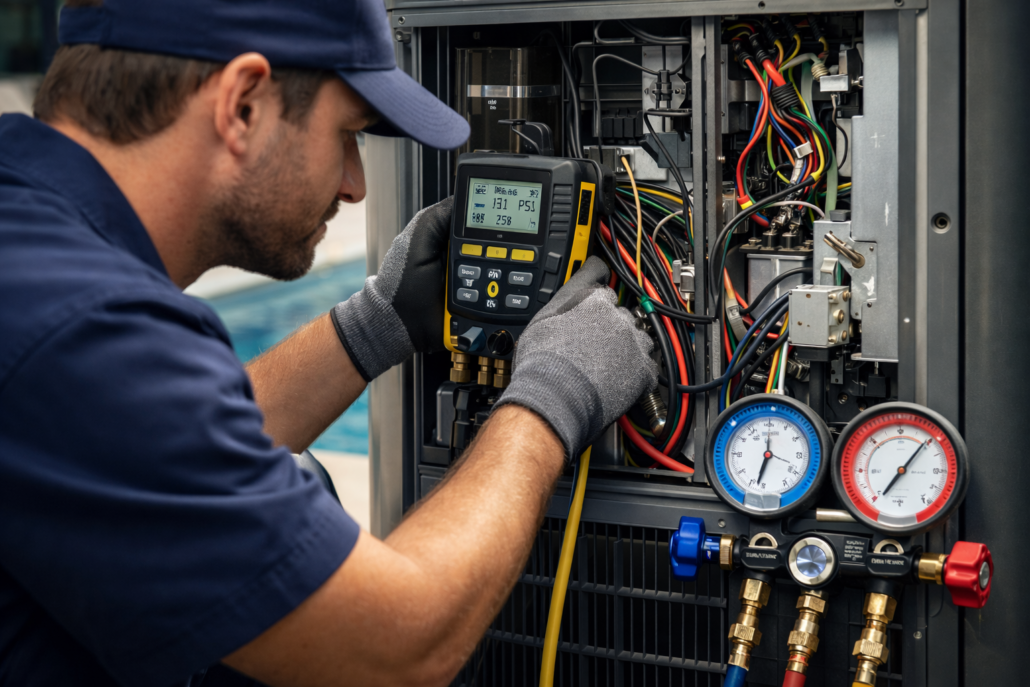
While the signs mentioned above can indicate a problem, pinpointing the exact location and severity of duct leaks requires professional expertise and specialized equipment. HVAC technicians employ a range of methods to ensure accurate Duct Leak Detection, guaranteeing that no leak goes unnoticed.
The process typically begins with a thorough visual inspection of accessible ductwork, looking for obvious gaps, disconnections, or damaged sections. However, many leaks are hidden, necessitating more advanced techniques. This is where specialized tools come into play, allowing technicians to precisely measure air loss and identify problem areas.
Specialized Tools for Effective Duct Leak Detection
Effective Duct Leak Detection utilizes several advanced tools to ensure comprehensive assessment:
- Duct Blaster Test: This is considered the most effective method for leak detection. A duct blaster system pressurizes the ductwork to a specific level, and a calibrated fan measures the amount of air required to maintain that pressure. The difference indicates the total leakage rate, providing a precise quantitative measure of air loss.
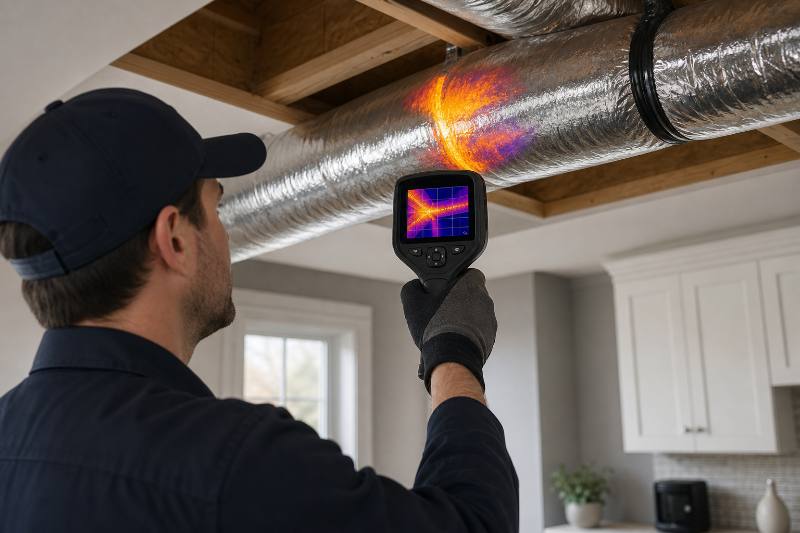
- Thermal Imaging Cameras: These cameras visualize temperature differentials, allowing technicians to see where conditioned air is escaping or unconditioned air is entering the ducts. Cold spots in warm areas or warm spots in cool areas can indicate leaks.
- Smoke Generators: Non-toxic smoke is introduced into the duct system. Where smoke escapes, there’s a leak. This visual method is excellent for pinpointing exact locations, especially in hard-to-reach areas.
- Pressure Gauges: Used in conjunction with duct blasters, these gauges provide precise readings of air pressure within the ductwork, helping to quantify leakage rates.
These tools, combined with an HVAC technician’s experience, ensure that even the smallest and most elusive leaks are identified. This comprehensive approach is vital for effective sealing and long-term energy savings. A standard duct leak detection service usually takes 1-3 hours, depending on the complexity of the ductwork.
What Causes Duct Leaks to Develop in HVAC Systems?
Duct leaks don’t just appear out of nowhere; they are often the result of several factors that compromise the integrity of your ductwork over time. Understanding these causes can help homeowners prevent future issues and appreciate the need for regular Duct Leak Detection.
- Poor Installation: Many leaks originate from improper installation, where duct sections are not securely joined or sealed correctly. Gaps at connections, plenums, and registers are common culprits.
- Wear and Tear: Over years of expansion and contraction due to temperature changes, duct materials can degrade, leading to cracks, holes, or loosening of seals.
- Pest Damage: Rodents and other pests can chew through ductwork, creating holes and compromising the system’s integrity, especially in attics and crawl spaces.
- Construction or Renovation Damage: Accidental damage during home renovations or other construction work can easily puncture or dislodge duct sections.
- Age of Ductwork: Older duct systems, particularly those made of less durable materials or sealed with outdated methods, are more prone to developing leaks over time.
Duct leaks are most commonly found at junctions where duct sections connect, around plenums (the main supply and return boxes), at seams in the ductwork, and where ducts connect to vents or registers. Leaks also frequently occur in unconditioned spaces like attics, crawl spaces, and basements, where they are out of sight and often go unnoticed.
DIY vs. Professional Duct Leak Detection
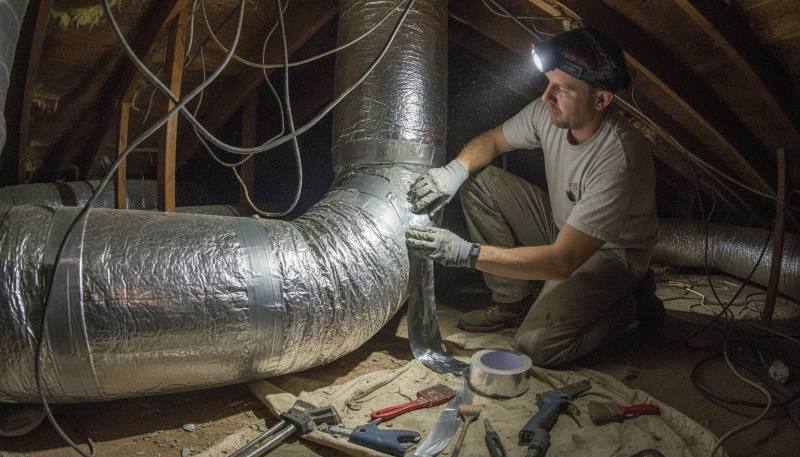
Many homeowners wonder if they can perform DIY Duct Leak Detection. While some basic visual inspections and simple tests can be done, professional services offer a level of accuracy and thoroughness that DIY methods often cannot match. For minor, accessible leaks, you might try a few things.
Basic DIY Methods for Identifying Leaks
- Visual Inspection: Look for obvious gaps or disconnections in accessible ductwork, especially in attics, basements, and crawl spaces.
- Smoke Test (Simple): Light an incense stick or use a smoke pencil near duct seams and connections while your HVAC system is running. If the smoke is drawn in or blown away, it indicates a leak.
- Listen for Hissing: In quiet areas, you might hear a faint hissing sound where air is escaping.
While these methods can help identify some leaks, they are often insufficient for comprehensive Duct Leak Detection. Hidden leaks, especially those within walls or ceilings, require specialized equipment and expertise that only professionals possess. Attempting extensive DIY repairs without proper knowledge can also lead to further damage or ineffective sealing.
Experiencing High Bills? Get Expert Duct Leak Detection from Stream Cold Air Corp
Our certified technicians specialize in pinpointing hidden duct leaks, restoring your HVAC system’s efficiency and comfort. Trust us for reliable, honest service.
The Cost of Duct Leak Detection Services
Understanding the average cost of professional Duct Leak Detection services is important for homeowners planning to address their HVAC efficiency. The cost can vary based on several factors, including the size and complexity of your home’s ductwork, the extent of the leaks, and your geographic location.
Generally, a professional duct leak assessment, which often includes a duct blaster test, can range from $200 to $500. This initial investment is crucial for accurately identifying all leaks and quantifying the total air loss. The cost of subsequent sealing and repair work will be additional, depending on the severity and number of leaks found. Many homeowners find that the long-term energy savings far outweigh the upfront cost of professional Duct Leak Detection and sealing.
Benefits of Prompt Duct Leak Detection and Repair
Detecting and repairing duct leaks promptly offers a multitude of benefits that extend beyond just lower energy bills. These advantages contribute significantly to your home’s overall comfort, health, and the longevity of your HVAC system.
- Significant Energy Savings: By preventing conditioned air from escaping, your HVAC system operates more efficiently, leading to a substantial reduction in heating and cooling costs. This is often the most immediate and tangible benefit.
- Improved Home Comfort: Eliminating hot and cold spots ensures consistent temperatures throughout your home, creating a more comfortable living environment for everyone.
- Enhanced Indoor Air Quality: Sealing leaks prevents dust, allergens, and other pollutants from entering your ductwork and circulating through your home, leading to cleaner, healthier air.
- Extended HVAC System Lifespan: When your system doesn’t have to work as hard to compensate for air loss, it experiences less wear and tear, extending its operational life and reducing the need for frequent repairs.
- Reduced Environmental Impact: Lower energy consumption means a smaller carbon footprint, contributing to a more sustainable lifestyle.
For reliable Duct Leak Detection and sealing services, Stream Cold Air Corp provides expert solutions in Deerfield Beach, FL, and surrounding areas. Our certified technicians are equipped with advanced tools to ensure your HVAC system operates at peak efficiency. We offer comprehensive duct leak detection packages tailored to your home’s specific needs.
Conclusion: The Ultimate Comfort and Savings with Duct Leak Detection
The silent threat of leaky ducts can undermine your home’s comfort, inflate your energy bills, and compromise your indoor air quality. Recognizing the critical signs—skyrocketing energy costs, inconsistent temperatures, and excessive dust—is the first vital step toward a more efficient and healthier living space. Professional Duct Leak Detection, utilizing advanced tools like duct blasters and thermal cameras, is indispensable for accurately identifying and sealing these hidden problems.
Investing in prompt detection and repair not only leads to significant energy savings but also enhances your overall home comfort and extends the life of your HVAC system. Don’t let hidden leaks continue to cost you money and peace of mind. Take action today to ensure your home’s ductwork is sealed and optimized for peak performance. Your comfort and your wallet will thank you.
What are the common signs of duct leaks in a residential property?
Common signs of duct leaks include unusually high energy bills, inconsistent temperatures across different rooms, reduced airflow from vents, dusty living spaces, and a continuously running HVAC system. These indicators suggest your system is working harder to compensate for lost conditioned air.
Why is professional duct leak detection crucial for HVAC system efficiency?
Professional duct leak detection is crucial because hidden leaks can cause significant energy waste, forcing your HVAC system to run longer and consume more power. Identifying and sealing these leaks ensures conditioned air reaches its intended destination, improving efficiency, extending equipment lifespan, and lowering utility costs.
How do HVAC technicians perform accurate duct leak detection?
HVAC technicians perform accurate duct leak detection using a combination of methods. This often involves visual inspection, smoke tests, and the most precise method, a duct blaster test. A duct blaster pressurizes the ductwork, allowing technicians to measure air leakage rates and pinpoint exact leak locations for effective sealing.
What specialized tools are used for effective duct leak detection?
Effective duct leak detection utilizes specialized tools such as duct blaster systems, which precisely measure air loss. Technicians also employ thermal imaging cameras to visualize temperature differentials, smoke generators to show air escaping, and even listening devices to hear subtle air leaks.
What are the benefits of detecting and repairing duct leaks promptly?
Prompt duct leak detection and repair offer numerous benefits, including significantly lower energy bills, improved indoor air quality by preventing dust and allergens from entering the system, enhanced home comfort with consistent temperatures, and extended longevity of your HVAC equipment due to reduced strain.
Who provides reliable duct leak detection and sealing services near me?
Stream Cold Air Corp provides reliable duct leak detection and sealing services in Deerfield Beach, FL, and surrounding areas. Our expert technicians use advanced tools to identify and repair leaks, ensuring your HVAC system operates at peak efficiency. Contact us for professional and honest service.
Where are duct leaks most commonly found in a typical home’s ductwork?
Duct leaks are most commonly found at junctions where duct sections connect, around plenums (the main supply and return boxes), at seams in the ductwork, and where ducts connect to vents or registers. Leaks also frequently occur in unconditioned spaces like attics, crawl spaces, and basements.