


Home Cooling Savings: 7 Ultimate Tricks for a Cooler Summer
Home Cooling Savings are within your reach, transforming your summer from a season of high utility bills into one of comfortable, affordable living. As temperatures rise, so often do our energy expenses, making efficient cooling a top priority for every homeowner. This comprehensive guide will unveil seven ultimate tricks to dramatically reduce your cooling costs without sacrificing comfort.
We’ll explore everything from smart thermostat strategies to essential HVAC maintenance, insulation improvements, and leveraging natural shading. Our goal is to empower you with actionable insights and practical solutions, ensuring your home remains an oasis of cool, even on the hottest days. Prepare to unlock significant savings and enjoy a more energy-efficient summer.
Key Takeaways
- Discover how optimizing your thermostat settings can lead to immediate and substantial Home Cooling Savings.
- Learn the critical role of regular HVAC maintenance in preventing costly breakdowns and improving efficiency.
- Understand how sealing air leaks and enhancing insulation can create a more energy-efficient home environment.
- Explore passive cooling strategies, including window treatments and landscaping, to naturally reduce indoor temperatures.
- Identify energy-efficient appliances and the strategic use of ceiling fans to complement your AC system.
- Realize the benefits of a professional home energy audit to pinpoint specific areas for improvement and maximize Home Cooling Savings.
- Uncover government rebates and incentives that can help offset the cost of energy-efficient upgrades.
Trick 1: Optimize Your Thermostat for Maximum Home Cooling Savings
Your thermostat is the command center for your home’s comfort and energy consumption. Setting it strategically is one of the easiest and most impactful ways to achieve significant Home Cooling Savings. Many homeowners make the mistake of setting their thermostat too low, forcing their AC system to work harder and consume more electricity than necessary.
The optimal thermostat setting for cooling savings, as recommended by the U.S. Department of Energy, is 78°F (26°C) when you are home. Raising the temperature by 7-10 degrees when you’re away or sleeping can lead to even greater energy reductions. This small adjustment can translate into substantial savings on your electricity bill over the summer months.
Do Smart Thermostats Really Help Save on Cooling Costs?
Yes, smart thermostats are incredibly effective for boosting your Home Cooling Savings. These advanced devices learn your preferences, can be controlled remotely via smartphone, and offer features like geofencing and scheduling. This ensures your AC only runs when needed, preventing unnecessary energy use when you’re out of the house. They provide precise control that traditional thermostats simply cannot match.
Programmable thermostats offer similar benefits, allowing you to set schedules for different times of the day or week. By automating temperature adjustments, you eliminate the human error of forgetting to change the setting, consistently contributing to lower energy bills. Investing in a smart or programmable thermostat is a wise decision for long-term savings.
Trick 2: Regular HVAC Maintenance for Significant Home Cooling Savings
Your air conditioning system is a complex piece of machinery that requires regular attention to perform at its best. Neglecting routine maintenance can lead to decreased efficiency, higher energy bills, and premature system failure. Proactive HVAC care is paramount for maximizing your Home Cooling Savings.
A well-maintained AC unit operates more efficiently, consuming less energy to cool your home. This directly translates to a lower electricity bill. Regular check-ups can identify minor issues before they escalate into costly repairs, extending the lifespan of your system and protecting your investment.
What Maintenance Tips Can Help Me Save on Home Cooling?
Several simple maintenance tasks can significantly contribute to your Home Cooling Savings. The most crucial is regularly cleaning or replacing your air filters. A dirty filter restricts airflow, forcing your AC to work harder and use more energy. Aim to check your filter monthly and replace it every 1-3 months, depending on usage and household conditions.
Ensure the outdoor condenser unit is free from debris like leaves, dirt, and grass clippings. Clear at least two feet of space around the unit for optimal airflow. Additionally, check for refrigerant leaks, which can severely impair your system’s cooling capacity. For comprehensive care, schedule an annual professional tune-up with a trusted HVAC service provider like Stream Cold Air Corp. They can perform a thorough inspection, clean coils, check refrigerant levels, and ensure all components are functioning efficiently.
When Should I Consider Replacing My Old AC Unit for Better Savings?
If your AC unit is more than 10-15 years old, frequently breaks down, or struggles to cool your home effectively, it might be time to consider a replacement. Older units are significantly less energy-efficient than modern models, often having a lower Seasonal Energy Efficiency Ratio (SEER) rating. While the initial cost of a new unit can be substantial, the long-term Home Cooling Savings from reduced energy consumption can quickly offset the investment.
New, high-efficiency AC systems can cut your cooling costs by 20-40%. An expert can assess your current system and help you determine if a replacement is the most cost-effective path to achieving your desired comfort and savings. This is a crucial step for truly unlocking ultimate home cooling savings.
Trick 3: Seal Air Leaks and Boost Insulation for Home Cooling Savings
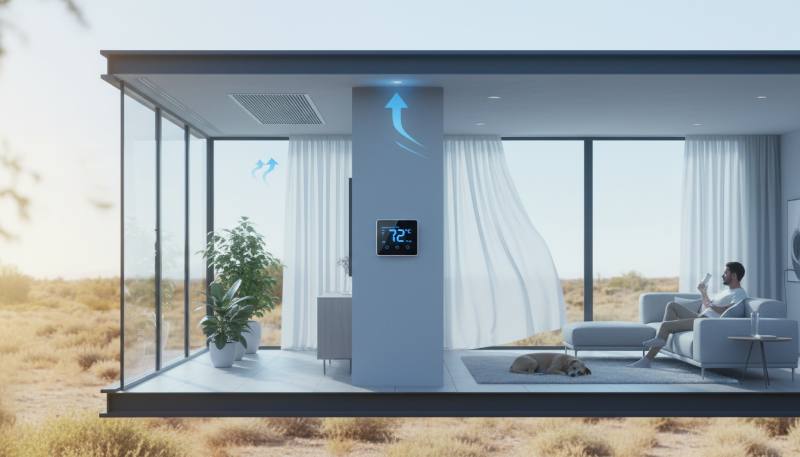
Your home’s envelope – its walls, roof, windows, and foundation – plays a critical role in maintaining indoor temperatures. Air leaks and inadequate insulation are major culprits behind high cooling bills, allowing cool air to escape and hot air to infiltrate. Addressing these issues is fundamental for achieving substantial Home Cooling Savings.
Even small cracks and gaps around windows, doors, and utility penetrations can lead to significant energy loss. Sealing these leaks creates a tighter, more efficient home, reducing the workload on your AC system. This simple step can make a noticeable difference in your comfort and your energy expenses.
How Can Improving Insulation Reduce My Cooling Expenses?
Improving insulation is one of the most effective long-term strategies for Home Cooling Savings. Insulation acts as a barrier, slowing the transfer of heat into your home during summer and out of it during winter. Without adequate insulation, especially in the attic and walls, your AC system continuously fights against external heat, leading to higher energy consumption.
Adding insulation to your attic, walls, and crawl spaces can dramatically reduce heat gain, allowing your AC to run less frequently and more efficiently. This not only lowers your cooling expenses but also improves overall indoor comfort by eliminating hot spots. It’s a foundational upgrade that pays dividends for years to come.
Trick 4: Leverage Natural Shading and Window Upgrades for Home Cooling Savings
The sun’s rays can be a major source of heat gain in your home, especially through windows. Implementing smart shading strategies and considering energy-efficient window upgrades can significantly contribute to your Home Cooling Savings. These passive cooling methods work in conjunction with your AC to keep your home cooler naturally.
Simple actions like closing blinds, curtains, and shades during the hottest parts of the day can block up to 77% of solar heat gain. Opt for light-colored, reflective blinds or blackout curtains for maximum effect. Strategic landscaping, such as planting trees or shrubs to shade south and west-facing windows, also provides excellent natural cooling.
How Much Money Can I Save with New Energy-Efficient Windows?
New energy-efficient windows can offer substantial Home Cooling Savings, though the exact amount varies based on your climate, home’s existing windows, and the type of new windows installed. Windows with low-emissivity (Low-E) coatings reflect heat, keeping your home cooler in summer and warmer in winter. Double or triple-paned windows with inert gas fills provide superior insulation.
While replacing all your windows is a significant investment, it can reduce your annual energy costs by 15-25% or more. This long-term saving, combined with improved comfort and reduced noise, makes energy-efficient windows a worthwhile upgrade for many homeowners seeking to maximize their home cooling savings.
What Are Low-Cost Ways to Keep a Home Cool Without Air Conditioning?
For those looking for immediate and low-cost Home Cooling Savings without relying solely on AC, several strategies can help. Beyond closing blinds, consider opening windows at night to allow cooler air in, then closing them tightly in the morning to trap the cool air. Using exhaust fans in kitchens and bathrooms can help remove hot, humid air.
Strategic placement of fans can also create a cross-breeze effect. Minimizing heat-generating activities during peak hours, such as cooking or running the dryer, can also help. These methods, while not replacing AC entirely in very hot climates, can reduce its workload and contribute to overall comfort.

Trick 5: Embrace Energy-Efficient Appliances and Ceiling Fans for Home Cooling Savings
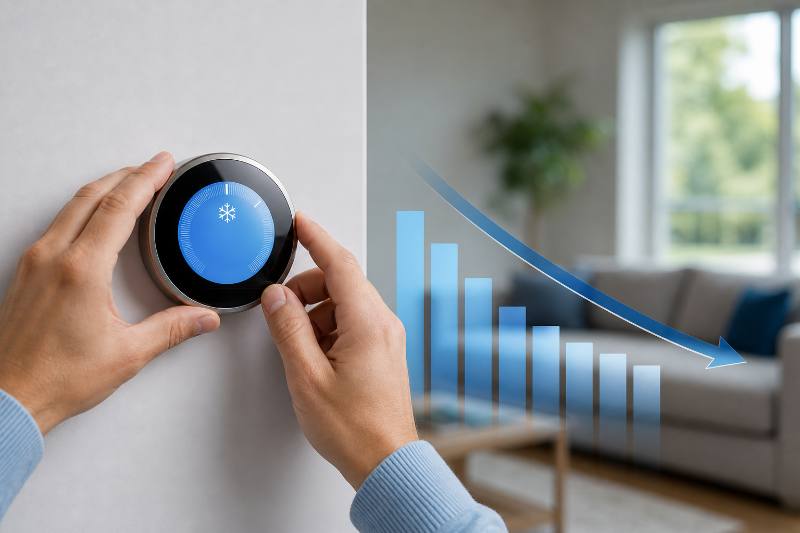
Beyond your HVAC system, other appliances and fixtures in your home contribute to its overall energy consumption and heat load. Making smart choices about these elements can further enhance your Home Cooling Savings. Modern, energy-efficient appliances are designed to perform their functions using less electricity, which directly impacts your utility bills.
When it’s time to replace old appliances, look for ENERGY STAR® certified models. These appliances meet strict energy efficiency guidelines set by the U.S. Environmental Protection Agency (EPA) and Department of Energy. They can significantly reduce the amount of heat generated in your home, thereby easing the burden on your AC system.
How Do Ceiling Fans Contribute to Home Cooling Savings?
Ceiling fans are an excellent, low-cost tool for boosting Home Cooling Savings. They create a wind-chill effect, making a room feel 4-6 degrees cooler without actually lowering the ambient temperature. This allows you to set your thermostat higher, reducing the amount of time your AC runs and leading to substantial energy savings.
Remember to use ceiling fans only in occupied rooms, as they cool people, not spaces. Turn them off when you leave a room to avoid wasting electricity. In combination with an optimized thermostat setting, ceiling fans can significantly enhance comfort while keeping your energy bills in check. They are a simple yet powerful component of any home cooling strategy.
Trick 6: Consider a Professional Energy Audit for Ultimate Home Cooling Savings
Sometimes, the most effective way to identify opportunities for Home Cooling Savings is to get an expert’s perspective. A professional home energy audit provides a comprehensive analysis of your home’s energy performance, pinpointing exactly where energy is being lost and where improvements can be made. This detailed assessment goes beyond what you might notice on your own.
During an energy audit, a certified professional will use specialized tools like blower doors and infrared cameras to detect air leaks, assess insulation levels, and evaluate the efficiency of your HVAC system and appliances. They will then provide a prioritized list of recommendations tailored to your home, outlining the most cost-effective ways to reduce energy consumption.
Who Provides Home Energy Audits Specifically for Cooling Efficiency?
Many local utility companies offer free or low-cost home energy audits to their customers. Additionally, independent energy auditors and HVAC contractors often provide these services. Look for auditors certified by organizations such as the Building Performance Institute (BPI) to ensure you receive a thorough and reliable assessment. These professionals specialize in identifying inefficiencies that impact your Home Cooling Savings.
An energy audit is an investment that quickly pays for itself through reduced utility bills. It provides a clear roadmap for improving your home’s energy efficiency, ensuring that every dollar you spend on cooling is utilized effectively. This proactive step is crucial for achieving long-term and sustainable savings.
Unlock Ultimate Home Cooling Savings with Stream Cold Air Corp
Our expert HVAC technicians specialize in optimizing your system for maximum efficiency and comfort. Trust us for reliable service that reduces your energy bills.
Trick 7: Explore Government Rebates and Incentives for Home Cooling Savings
Making energy-efficient upgrades to your home can be a significant investment, but you don’t always have to bear the full cost. Various government programs, utility companies, and manufacturers offer rebates, tax credits, and incentives to encourage homeowners to improve their energy efficiency. These programs can significantly reduce the upfront cost of upgrades, making substantial Home Cooling Savings more accessible.
These incentives are designed to promote a greener environment and reduce overall energy consumption. By taking advantage of them, you can upgrade your home with high-efficiency HVAC systems, improved insulation, or energy-efficient windows at a fraction of the retail price, accelerating your return on investment.
Where Can I Find Government Rebates for Home Cooling Upgrades?
To find government rebates and incentives for Home Cooling Savings, start by checking the Database of State Incentives for Renewables & Efficiency (DSIRE). This comprehensive resource provides detailed information on federal, state, and local programs. Your local utility company’s website is also an excellent place to look, as many offer their own rebate programs for energy-efficient appliance purchases or HVAC upgrades.
Additionally, manufacturers of energy-efficient products often have rebate programs. When purchasing a new AC unit or smart thermostat, inquire about any available rebates directly from the retailer or manufacturer. Combining these incentives can lead to substantial savings on your home improvement projects, making it easier to achieve your home cooling goals.
Conclusion: Unlock Your Ultimate Home Cooling Savings
Achieving significant Home Cooling Savings is not just about turning down the thermostat; it’s about adopting a holistic approach to energy efficiency. By implementing these seven ultimate tricks, you can transform your home into a haven of comfort while dramatically reducing your energy bills. From optimizing your thermostat and maintaining your HVAC system to sealing leaks, improving insulation, and leveraging natural shading, every step contributes to a cooler, more affordable summer.
Remember that investing in energy-efficient upgrades and professional services, such as an energy audit, can yield long-term benefits that far outweigh the initial costs. Explore available rebates and incentives to make these upgrades even more accessible. With a little planning and consistent effort, you can enjoy a comfortable home and substantial Home Cooling Savings for years to come.
Frequently Asked Questions About Home Cooling Savings
What are the best ways to save money on home cooling?
Achieving significant home cooling savings involves a combination of strategies. Regular AC maintenance, optimizing thermostat settings, improving insulation, sealing air leaks, and utilizing ceiling fans are among the most effective methods. Strategic shading with curtains or blinds also plays a crucial role in reducing heat gain.
How can I lower my electricity bill from air conditioning?
To lower your electricity bill from air conditioning, set your thermostat higher when you’re away or sleeping, ideally around 78°F. Use programmable or smart thermostats for automated adjustments. Ensure your AC filter is clean, ducts are sealed, and consider professional tune-ups to maintain efficiency and boost your home cooling savings.
Why is my home cooling so expensive in the summer?
High summer cooling costs can stem from several factors, including an inefficient or aging AC unit, poor home insulation, leaky ducts, open windows/doors, or a thermostat set too low. Extreme outdoor temperatures force your system to work harder, directly impacting your home cooling savings potential.
Do smart thermostats really help save on cooling costs?
Yes, smart thermostats are highly effective for home cooling savings. They learn your preferences, can be controlled remotely, and offer features like geofencing and scheduling, ensuring your AC only runs when needed. This precise control prevents unnecessary energy use, significantly cutting down on cooling costs.
What is the optimal thermostat setting for cooling savings?
For optimal home cooling savings and comfort, the U.S. Department of Energy recommends setting your thermostat to 78°F (26°C) when you are home. Raising it 7-10 degrees higher when you’re away can result in even greater energy reductions without compromising comfort upon your return.
How do ceiling fans contribute to home cooling savings?
Ceiling fans create a wind-chill effect, making a room feel 4-6 degrees cooler without actually lowering the ambient temperature. This allows you to set your thermostat higher, leading to substantial home cooling savings. Remember to turn fans off when leaving a room, as they cool people, not spaces.
What maintenance tips can help me save on home cooling?
Regular maintenance is key to maximizing home cooling savings. This includes cleaning or replacing air filters monthly, ensuring outdoor condenser coils are free of debris, checking for refrigerant leaks, and scheduling annual professional tune-ups. Proper maintenance keeps your AC running efficiently and extends its lifespan.