


AC Drain Line Clog: 7 Powerful Secrets to Prevent Costly Water Damage
An AC Drain Line Clog is a common yet often overlooked issue that can lead to significant water damage and costly repairs if not addressed promptly. Your air conditioning system works hard to keep your home cool and comfortable, and a crucial part of that process involves removing humidity from the air. This moisture, known as condensate, needs a clear path to drain away from your unit. When this path becomes obstructed, problems quickly arise.
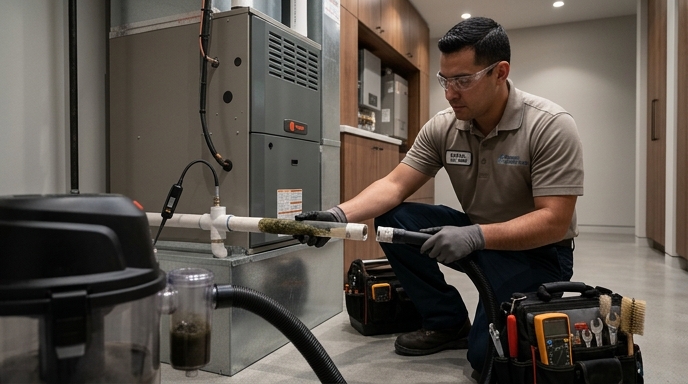
Ignoring a blocked AC drain line can transform a minor inconvenience into a major headache, threatening ceilings, walls, and even electrical systems. This comprehensive guide will equip you with the knowledge to understand, identify, and effectively resolve an AC drain line clog, offering powerful secrets for both prevention and repair. Protect your home and ensure your AC runs efficiently with our expert insights.
Key Takeaways
- Recognize the early warning signs of an AC Drain Line Clog to prevent extensive water damage and costly repairs.
- Learn effective DIY methods for clearing a blocked drain line, including safe flushing techniques and the use of a wet/dry vacuum.
- Understand when to call a professional HVAC technician for stubborn clogs or complex AC drain line issues.
- Discover essential preventative maintenance tips to keep your AC drain line clear and functioning optimally year-round.
Understanding the AC Drain Line Clog: What Causes It?
An AC Drain Line Clog isn’t just a random occurrence; it’s typically the result of a gradual buildup of various substances within the condensate drain system. Your air conditioner removes humidity from the air, and this moisture collects in a condensate pan beneath the indoor evaporator coil. From there, it flows through a PVC pipe, the drain line, and exits your home. This dark, moist environment is unfortunately an ideal breeding ground for several culprits.
The primary cause of an AC drain line clog is biological growth. Algae, mold, and mildew thrive in the stagnant water found in the condensate pan and drain line. Over time, these microorganisms form a slimy, gel-like substance that adheres to the inside of the pipe. As this slime accumulates, it narrows the passage, eventually leading to a complete blockage.
The Silent Threat: Algae and Debris Buildup
Beyond biological growth, other common household elements contribute to an AC Drain Line Clog. Dust, dirt, lint, pet hair, and even insect debris can get pulled into the AC system and settle in the condensate pan. These particles mix with the water and the growing slime, creating a thicker, more resilient obstruction. Without regular maintenance, this buildup is almost inevitable.
Environmental Factors and Your AC Drain Line Clog
The climate you live in can also play a significant role. In humid environments, AC units produce a larger volume of condensate, providing more moisture for algae and mold to flourish. This accelerates the rate at which an AC drain line clog can form. Understanding these underlying causes is the first step toward effective prevention and timely resolution.
Spotting the Signs: How to Know You Have an AC Drain Line Clog
Recognizing the symptoms of an AC Drain Line Clog early can save you from costly repairs and extensive water damage. The signs often start subtly but become more pronounced as the blockage worsens. Being vigilant about these indicators is key to maintaining your home’s comfort and structural integrity.
Visible Water Leaks and Overflow
The most obvious sign of an AC drain line clog is visible water. If the drain line is blocked, the condensate water has nowhere to go and will back up into the condensate pan. Once the pan overflows, you’ll likely see water pooling around your indoor AC unit, furnace, or air handler. This can manifest as a leak in your ceiling, a wet spot on the floor, or water dripping from the unit itself.
This is a clear indicator that your AC drain line is clogged and needs immediate attention.
Unpleasant Odors and Humidity
A musty or moldy smell emanating from your AC vents or near the indoor unit is another common symptom. This odor is caused by stagnant water and the growth of mold and mildew within the condensate pan and drain line. Additionally, if your AC system seems to be struggling to remove humidity, leaving your home feeling unusually damp or sticky, it could be due to a compromised drain line affecting its dehumidifying function.
This increased indoor humidity can also be a sign of an AC Drain Line Clog.
AC System Shutdowns
Many modern AC units are equipped with a safety float switch in the condensate pan. This switch is designed to detect when the water level in the pan rises too high due to a blockage. If the water reaches a critical level, the float switch will trip, automatically shutting down your AC system to prevent overflow and water damage. If your AC unit is unexpectedly turning off, especially during humid weather, a clogged drain line is a very likely culprit.
This protective measure highlights the serious nature of an ignored AC Drain Line Clog.
The Impact of an Ignored AC Drain Line Clog: Preventing Costly Water Damage
Ignoring an AC Drain Line Clog is akin to ignoring a ticking time bomb in your home’s HVAC system. The consequences can range from minor inconveniences to significant structural damage and health hazards. Understanding these potential damages underscores the importance of prompt action.
Water Damage to Your Home’s Structure
When the condensate pan overflows, water can seep into ceilings, walls, and flooring. This can lead to unsightly water stains, softened drywall, warped wood, and compromised structural integrity. Repairing such damage is not only expensive but can also be a lengthy and disruptive process. The location of your indoor unit, often in an attic or utility closet, means leaks can go unnoticed for some time, exacerbating the damage before it’s discovered.
Mold Growth and Health Risks
Stagnant water and damp building materials create a perfect breeding ground for mold and mildew. Mold growth can spread rapidly, not only causing further damage to your home but also posing serious health risks. Exposure to mold can trigger allergies, respiratory issues, and other health problems for occupants. An untreated AC Drain Line Clog can quickly turn your home into an unhealthy environment.
System Malfunctions and Repair Costs
Beyond water damage, a clogged drain line can also lead to operational problems for your AC unit. The constant presence of excess moisture can corrode electrical components, leading to costly repairs or even premature system failure. If the safety float switch repeatedly shuts off your unit, it puts unnecessary strain on the system, potentially shortening its lifespan. Addressing an AC Drain Line Clog promptly protects your entire HVAC investment.
DIY Solutions: How to Unclog an AC Drain Line at Home
Before calling a professional, many homeowners can successfully clear an AC Drain Line Clog using a few simple DIY methods. These fixes are generally safe and effective for minor to moderate blockages. Always prioritize safety and consult your AC manual if you’re unsure about any steps.
Safety First: Power Off Your AC
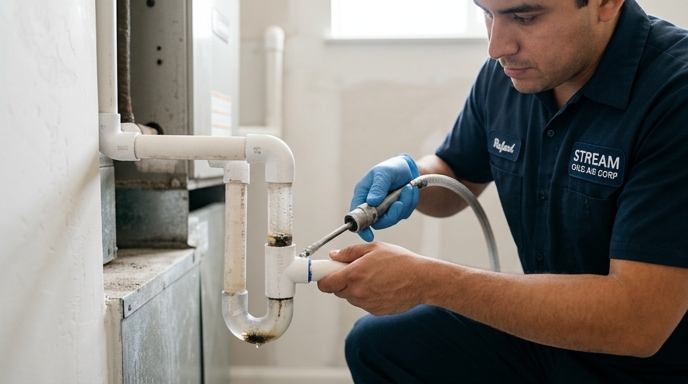
Before attempting any work on your AC unit, it is absolutely crucial to turn off the power. Locate your thermostat and set the system to
__CTA_BLOCK__
Frequently Asked Questions About AC Drain Line Clogs
What causes an AC drain line to clog?
An AC drain line clog typically occurs due to an accumulation of algae, mold, dirt, dust, and other debris that thrive in the dark, moist environment of the condensate pan and drain line.
Over time, this biological growth forms a slimy blockage, preventing water from draining properly.
How do I know if my AC drain line is clogged?
You can suspect an AC drain line clog if you observe water pooling around your indoor AC unit, a musty odor near the unit, the AC system shutting off unexpectedly, or a safety float switch being tripped. Visible mold or slime in the condensate pan is also a clear indicator.
What are the common symptoms of a clogged AC condensate drain?
Key symptoms include water leaks near the furnace or air handler, a musty smell from the vents, unexplained humidity in your home, the AC system failing to cool efficiently, and, in advanced stages, the AC unit automatically shutting down due to the safety switch being activated.
How to unclog an AC drain line at home?
To unclog an AC drain line at home, first turn off your AC unit. Locate the condensate drain line (often a PVC pipe). You can try pouring a cup of distilled vinegar mixed with water down the access port, or using a wet/dry vacuum to suction out the clog from the outdoor end of the pipe. Always consult your AC manual first.
Can a clogged AC drain line cause water leaks inside the house?
Absolutely. When an AC drain line clogs, the condensate water has nowhere to go. It will back up in the condensate pan and eventually overflow, leading to water leaks inside your house, often in the attic, ceiling, or around the indoor air handler unit.
What are the potential damages from an ignored AC drain clog?
Ignoring an AC drain line clog can lead to severe water damage to ceilings, walls, flooring, and even electrical components, potentially fostering mold growth. It can also cause your AC system to shut down, leading to uncomfortable temperatures and costly repairs.
How much does professional AC drain line cleaning cost?
The cost of professional AC drain line cleaning can vary based on location, severity of the clog, and the HVAC company. Generally, it can range from $75 to $250. Some companies include this service as part of a routine AC maintenance package.
Where is the AC condensate drain line typically located on an HVAC unit?
The AC condensate drain line typically connects to the condensate pan, which is usually located directly beneath the evaporator coil in your indoor air handler unit or furnace. It’s often a PVC pipe that runs from the indoor unit to the outside of your home.
Should I call an HVAC technician for a clogged AC drain line?
If DIY methods fail, or if you’re unsure about attempting the repair yourself, it’s always best to call a qualified HVAC technician. They have the expertise and tools to safely and effectively clear an AC drain line clog, preventing further damage and ensuring proper system function.
What is the best way to prevent AC drain line clogs?
The best prevention for an AC drain line clog is regular maintenance. Pouring a cup of distilled white vinegar down the condensate drain line every few months can inhibit algae growth. Additionally, scheduling annual professional AC tune-ups helps ensure the drain line is inspected and cleaned.
Are there specific products to clear a blocked AC drain pipe?
While household products like distilled white vinegar are often recommended for minor clogs and prevention, there are specialized AC drain pan tablets and liquid treatments designed to prevent microbial growth. Avoid using harsh chemical drain cleaners, as they can damage your AC unit’s components.
Why is water backing up from my AC unit?
Water backing up from your AC unit is almost always a sign of an AC drain line clog. The condensate water, which is a natural byproduct of the cooling process, cannot flow freely out of the system due to an obstruction, causing it to overflow the condensate pan.
What tools are needed for DIY AC drain unclogging?
For DIY AC drain unclogging, you might need a wet/dry vacuum, a funnel, distilled white vinegar, warm water, a small brush (like a bottle brush), and possibly a flexible drain brush or snake for more stubborn clogs. Always have towels ready for spills.
How often should an AC drain line be cleaned?
Ideally, an AC drain line should be cleaned at least once or twice a year, especially before the cooling season begins. In humid climates or homes with higher dust levels, more frequent cleaning (e.g., every 3-4 months) might be beneficial to prevent an AC drain line clog.
When should I consider booking professional AC drain line repair service?
You should consider booking professional AC drain line repair service if DIY methods haven’t cleared the clog, if you’re uncomfortable performing the task yourself, if the leak persists, or if you suspect underlying issues with your AC system beyond a simple blockage.
Learn more from authoritative resources: Consumer Reports and HGTV.