
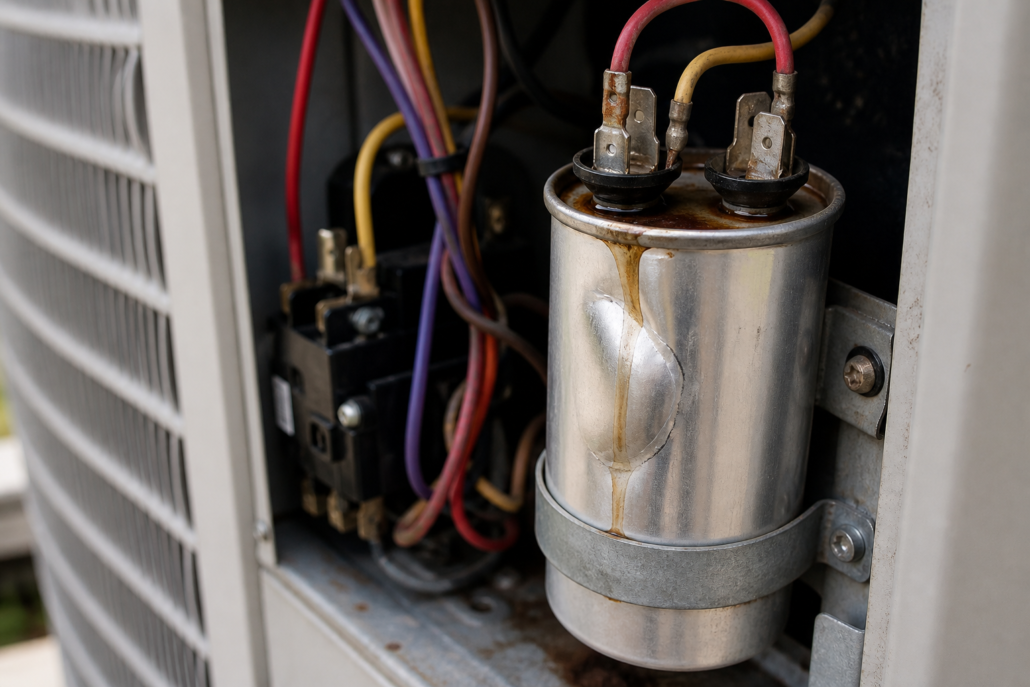
AC Capacitor Replacement is a critical service that ensures your air conditioning unit operates efficiently, especially as the demanding summer months approach. Many homeowners overlook the capacitor, a small but mighty component that plays an indispensable role in your AC system’s performance. When it starts to fail, your entire cooling system can grind to a halt, leaving you in uncomfortable heat.
Understanding the signs of a failing capacitor is paramount to preventing a complete AC breakdown and avoiding more costly repairs down the line. This comprehensive guide will illuminate the essential functions of your AC capacitor, detail the three critical indicators that signal an urgent need for replacement, and provide expert insights into maintaining your system’s longevity.
By recognizing these crucial warnings, you can take proactive steps to ensure your home remains cool and comfortable, making timely AC Capacitor Replacement a priority.
Key Takeaways for AC Capacitor Replacement
- Identify the three critical signs—no start with humming, slow fan, or warm air—that indicate an urgent need for AC Capacitor Replacement.
- Understand the vital role of the capacitor in initiating your AC unit’s compressor and fan motors.
- Learn why professional intervention is crucial for safe and effective AC Capacitor Replacement, avoiding dangerous electrical risks.
- Discover the factors influencing the cost of replacement and how to choose the right capacitor for your specific AC model.
Understanding the Role of Your AC Capacitor in AC Capacitor Replacement
The air conditioning system in your home relies on several key components to deliver cool air, and among the most vital is the AC capacitor. Often described as the “heart” or “starter pistol” of your AC unit, this small cylindrical component is responsible for storing and releasing an electrical charge. This burst of power is essential for initiating the compressor and the outdoor fan motor, which are the primary movers in your cooling cycle.
Without a properly functioning capacitor, these critical parts simply cannot start.
An effective AC Capacitor Replacement ensures that your unit can consistently kickstart its operations. There are typically two types of capacitors in an AC unit: a start capacitor, which provides a large initial jolt to get the motor going, and a run capacitor, which helps maintain a steady electrical flow once the motor is running. Some units use a dual-run capacitor that handles both the fan and compressor.
When this component begins to degrade, it loses its ability to hold and deliver the necessary charge. This directly impacts your AC’s ability to turn on or run efficiently, leading to a cascade of problems that can escalate if not addressed promptly. Recognizing its function is the first step in understanding the importance of timely AC Capacitor Replacement.
3 Critical Signs You Need AC Capacitor Replacement
Identifying the early warning signs of a failing AC capacitor can save you from a complete system shutdown and potentially more expensive repairs. These indicators are often subtle at first but become more pronounced as the capacitor deteriorates. Paying close attention to your AC unit’s behavior can help you determine if AC Capacitor Replacement is imminent.
Sign 1: AC Unit Hums But Doesn’t Start or Fan Doesn’t Spin
This is perhaps the most common and unmistakable sign of a bad capacitor. You might hear your outdoor AC unit (condenser) making a distinct humming or buzzing sound, but the fan blades are not spinning, and the compressor isn’t engaging. The humming indicates that the unit is receiving power and attempting to start, but it lacks the necessary electrical “kick” from the capacitor to get the motors moving.
This often means the start capacitor or the run capacitor for the fan motor has failed, necessitating an AC Capacitor Replacement.
Sign 2: AC Blows Warm Air or Cycles On and Off Frequently
If your AC is running but only blowing warm air, or if it constantly cycles on and off without effectively cooling your home, a failing capacitor could be the culprit. A weak capacitor might allow the compressor or fan to start intermittently or run at reduced efficiency. This leads to inadequate cooling and causes the unit to work harder, consuming more energy and struggling to reach the thermostat setting. A proper AC Capacitor Replacement can restore consistent cooling.
Sign 3: Visible Swelling or Leaking on the Capacitor Itself
While this sign requires opening the outdoor unit, it’s a clear visual indicator of a faulty capacitor. A healthy capacitor should be smooth and cylindrical. If you observe any bulging, swelling at the top or sides, or if there’s any visible leakage of oil, it’s a definitive sign of internal failure. This physical damage means the capacitor is no longer functioning correctly and requires immediate AC Capacitor Replacement. Always ensure the power is completely disconnected before inspecting any internal components.
Experiencing AC Issues in Deerfield Beach? Trust Stream Cold Air Corp for Expert AC Capacitor Replacement!
Don’t let a failing AC capacitor leave you in the heat. Our certified technicians provide swift, reliable AC capacitor replacement services, restoring your comfort with transparent pricing and exceptional service.
Diagnosing and Testing for AC Capacitor Replacement
Beyond the visible signs, a professional HVAC technician has the tools and expertise to accurately diagnose a failing capacitor. While some homeowners might be tempted to test the capacitor themselves, it’s crucial to understand the inherent dangers. Capacitors store lethal electrical charges even when the unit is off, making professional handling essential for any AC Capacitor Replacement.
How Do I Test an AC Capacitor to See If It’s Bad?
A qualified technician uses a multimeter with a capacitance setting to test the capacitor. After safely discharging the capacitor (a critical safety step), they will remove it and connect the multimeter leads to its terminals. The reading on the multimeter should match the microfarad (µF) rating printed on the capacitor label, usually within a 5-10% tolerance. If the reading is significantly lower, erratic, or shows an open circuit, the capacitor is faulty and requires AC Capacitor Replacement.
Why Is My AC Capacitor Making a Buzzing Sound?
A buzzing sound from your AC capacitor often indicates that it’s struggling to hold or release its charge effectively. This can happen when the internal components are failing, causing the electrical current to fluctuate or arc. This buzzing is a warning sign that the capacitor is under stress and likely nearing the end of its lifespan, making an impending AC Capacitor Replacement a strong possibility. It’s a clear signal to call a professional.

The Process of Professional AC Capacitor Replacement
When you suspect a failing capacitor, calling a professional HVAC technician is the safest and most reliable course of action. They possess the specialized knowledge, tools, and safety equipment to perform an AC Capacitor Replacement correctly and efficiently. Attempting a DIY replacement without proper training can lead to severe electrical shock or further damage to your AC unit.
How Long Does an AC Capacitor Replacement Typically Take?
For an experienced technician, an AC Capacitor Replacement is a relatively quick procedure. It typically takes between 15 to 45 minutes from start to finish. This timeframe includes crucial safety steps such as disconnecting power and safely discharging the old capacitor, testing the new one, and ensuring the AC unit functions correctly after installation. The speed and precision of a professional minimize downtime for your cooling system.
Can I Replace an AC Capacitor Myself, or Do I Need a Professional?
While resources exist for DIY AC Capacitor Replacement, it is strongly advised against for most homeowners. Capacitors store a high voltage charge that can be lethal even when the AC unit is turned off. Professionals are trained in electrical safety protocols, including how to safely discharge the capacitor before handling it. Incorrect installation can also damage your AC system or lead to premature failure of the new component. Trusting a professional ensures safety and proper function.
What Tools Are Needed for an AC Capacitor Replacement?
A professional technician performing an AC Capacitor Replacement will typically use a range of tools including a multimeter (with capacitance testing), insulated screwdrivers, needle-nose pliers, wire cutters/strippers, and safety gloves. Crucially, they also bring their expertise in electrical safety and AC system diagnostics, which no homeowner’s toolkit can replicate. This comprehensive approach ensures a safe and effective repair.
Are There Emergency AC Capacitor Replacement Services Available?
Yes, many HVAC companies, including Stream Cold Air Corp, offer emergency AC Capacitor Replacement services. A failing capacitor often leads to a complete AC breakdown during peak heat, making prompt service essential. Emergency services ensure that a technician can quickly respond to your call, diagnose the issue, and perform the necessary replacement to restore your cooling as soon as possible, minimizing discomfort and potential heat-related health risks.
Choosing the Right AC Capacitor Replacement and Cost Considerations
Selecting the correct capacitor for your AC unit is vital for its performance and longevity. Capacitors come in various microfarad (µF) ratings and voltage specifications, which must precisely match your unit’s requirements. An incorrect AC Capacitor Replacement can lead to inefficient operation, damage to other components, or even a fire hazard.
What Kind of AC Capacitor Do I Need for My Unit?
The type of AC capacitor you need is determined by your specific AC unit’s manufacturer specifications. The required microfarad (µF) and voltage (VAC) ratings are usually printed on the label of the old capacitor. It’s crucial to match these specifications exactly. Dual-run capacitors will have three terminals (HERM, FAN, C) and two µF ratings (e.g., 40/5 µF), while single capacitors will have two terminals and one µF rating.
Always consult your unit’s manual or a professional for precise matching before any AC Capacitor Replacement.
Where Can I Find a New AC Capacitor for Sale?
New AC capacitors can be purchased from HVAC supply stores, specialized electrical parts retailers, and online marketplaces. However, it’s highly recommended to have a professional HVAC technician source and install the capacitor. They ensure you get the correct, high-quality part that is compatible with your specific AC model, preventing potential issues that can arise from using an incorrect or low-quality component. This is part of a reliable AC Capacitor Replacement service.
What Is the Average Cost to Replace an AC Capacitor?
The average cost for an AC Capacitor Replacement typically ranges from $150 to $400, including both parts and labor. This price can vary based on the type of capacitor needed (single vs. dual-run), the complexity of the installation, your geographical location, and the specific HVAC service provider. While the part itself might be inexpensive, the cost primarily covers the technician’s expertise, diagnostic time, and the inherent safety risks involved in handling high-voltage components.
How Much Does an HVAC Technician Charge to Replace an AC Capacitor?
An HVAC technician’s charge for an AC Capacitor Replacement encompasses several factors. This includes the technician’s hourly rate, the markup on the part, and any service call fees. Reputable companies like Stream Cold Air Corp provide transparent pricing, often offering a flat rate for this common repair. This ensures you know the full cost upfront, without hidden fees, making the decision for a professional replacement straightforward and stress-free. For a detailed quote, it’s best to contact local providers.

Why Expert AC Capacitor Replacement is Essential
While the idea of a quick fix might be appealing, the complexities and dangers associated with electrical components in an AC unit make expert AC Capacitor Replacement not just convenient, but absolutely essential. A professional ensures the job is done safely, correctly, and with lasting results, protecting both your home and your investment.
What Are the Dangers of Replacing an AC Capacitor Without Proper Knowledge?
The dangers of attempting an AC Capacitor Replacement without proper knowledge are significant and potentially life-threatening. Capacitors can store a lethal electrical charge for extended periods, even after the power to the unit is off. Touching the terminals without safely discharging the capacitor can result in severe electrical shock, burns, or even electrocution. Additionally, improper wiring or installing the wrong capacitor can cause further damage to your AC system, leading to more expensive repairs or even a fire.
Always prioritize safety by calling a certified technician. For more information on electrical safety, consult resources like the National Fire Protection Association’s electrical safety guidelines.
Who Offers AC Capacitor Replacement Services in My Area?
If you’re in Deerfield Beach, FL, and the surrounding areas, Stream Cold Air Corp is your trusted provider for expert AC Capacitor Replacement services. Our team of certified and experienced HVAC technicians is equipped to handle all types of AC capacitor issues, ensuring your system is back up and running efficiently. We pride ourselves on prompt, reliable service and transparent pricing, making us the go-to choice for all your air conditioning needs.
How Do I Schedule an AC Capacitor Replacement Appointment?
Scheduling an AC Capacitor Replacement appointment is simple. You can typically call your local HVAC service provider directly or visit their website to book an appointment online. Many companies offer flexible scheduling options to accommodate your needs. When you contact Stream Cold Air Corp, our friendly staff will guide you through the process, answer any questions you may have, and dispatch a technician to your location promptly. Don’t delay in addressing a failing capacitor; swift action can prevent further damage.
The importance of timely AC Capacitor Replacement cannot be overstated. Recognizing the critical signs—a humming unit that won’t start, warm air, or a visibly damaged capacitor—is your first line of defense against a complete AC breakdown. While the temptation to address AC issues yourself might arise, the inherent electrical dangers and the need for precise component matching make professional intervention indispensable.
Investing in expert service ensures not only your safety but also the optimal performance and longevity of your air conditioning system. Don’t wait for a minor issue to become a major repair; address capacitor problems promptly to maintain your home’s comfort. For reliable service and to schedule your appointment, visit Stream Cold Air Corp today.
Common Questions About AC Capacitor Replacement
What is the function of an AC capacitor in an air conditioner?
An AC capacitor acts like a battery, storing and releasing an electrical charge to give the fan motor and compressor the powerful jolt they need to start. Without a properly functioning capacitor, these critical components cannot kickstart, leading to your AC unit struggling or failing to turn on. It’s an essential component for the efficient operation of your air conditioning system.
What are the common signs of a failing AC capacitor?
Common signs of a failing AC capacitor include your unit making a humming sound but not turning on, the outdoor fan not spinning or spinning slowly, the AC blowing warm air, or your energy bills suddenly increasing. You might also notice the AC repeatedly trying to start and then shutting off, often accompanied by a clicking noise from the outdoor unit.
How long does an AC capacitor replacement typically take?
An AC capacitor replacement is usually a quick process for a skilled HVAC technician. It typically takes anywhere from 15 to 45 minutes, depending on the unit’s accessibility and the technician’s experience. This timeframe includes safety precautions, testing the old capacitor, installing the new one, and retesting the system.
Can I replace an AC capacitor myself, or do I need a professional?
While some homeowners with electrical experience might attempt an AC capacitor replacement, it is strongly recommended to hire a professional. Capacitors store dangerous electrical charges even when the unit is off, posing a significant risk of severe electrical shock. Professionals have the necessary tools, expertise, and safety equipment to perform the job safely and correctly, ensuring your unit functions properly afterward.
What is the average cost to replace an AC capacitor?
The average cost for an AC capacitor replacement can vary based on your location, the type of capacitor needed, and the HVAC service provider. Generally, you can expect to pay between $150 and $400, including parts and labor. Stream Cold Air Corp offers transparent pricing and checks manufacturer warranties to potentially save you money.
Who offers AC capacitor replacement services in my area?
Stream Cold Air Corp offers expert AC capacitor replacement services in Deerfield Beach, FL, and the surrounding areas. Our certified technicians are experienced with all major AC brands and are committed to providing reliable and efficient service to restore your comfort quickly. Contact us for prompt and professional assistance.
What are the dangers of replacing an AC capacitor without proper knowledge?
The primary danger of replacing an AC capacitor without proper knowledge is the risk of a severe, potentially fatal, electrical shock. Capacitors can retain a lethal electrical charge long after the power to the AC unit has been turned off. Additionally, incorrect installation can damage your AC system further or lead to premature failure of the new capacitor.

